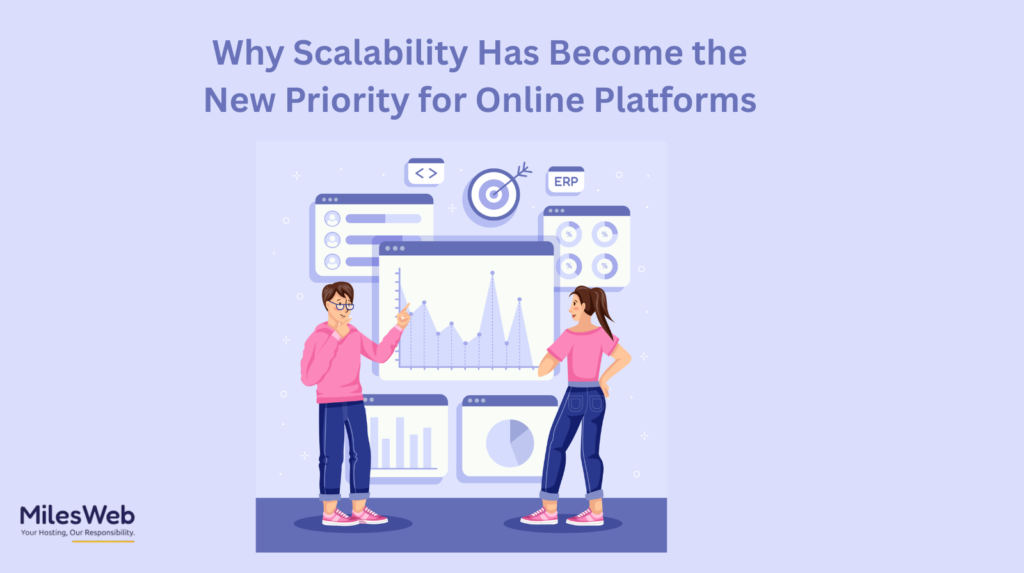
We all know that the age of user expectations, digital consumption, and technology complexity is evolving at unprecedented rates. With the internet, businesses grow into new markets without the limitations of a physical presence.
This evolution creates an environment in which the importance of scalability is not merely a technical option but rather a core business need. Smoothly scaling platforms, like cloud servers for small businesses, have improved resiliency, flexibility, and competitiveness compared to other platforms.
Scalability is a measure of how well a system can adapt to increased demand without sacrificing quality of performance, security, or user experience. It has become the foundation of nearly every modern digital business (especially cloud hosting shared) for a long-term, sustainable competitive advantage.
User Growth Is Now Unpredictable
In the past, infrastructure planning was based on gradually increasing numbers of users. This approach is no longer effective. The emergence of viral content, seasonal spikes in popularity of products, and the ability to quickly adapt to cross-border trends have made it difficult to forecast user demand and traffic. Each of these types of events describes a scenario that requires a digital business to have infrastructure that can scale up rapidly to accommodate the increased demand for a specific period. Further, once the traffic gets in control, your server should also scale down to optimize operational costs when demand levels return to normal conditions.
Websites have become increasingly complex in the last few years. Most web applications use advanced HTML/CSS code, which makes them harder to load and maintain.
Modern Applications Use More Resources
Today’s online technologies include:
- Complex interactive experiences with real-time capabilities
- Customized experiences based on data collected from users
- Heavy use of AI, machine learning, virtual reality, and automated workflows
Examples of some common types of websites include:
- Video streaming sites (e.g., Netflix, Hulu)
- E-commerce stores with dynamic product catalogs (e.g., Amazon)
- Social networks with constantly updated user content feeds (e.g., Facebook)
- AI-based applications Processing Real-Time Data Inputs (e.g., Google’s machine learning)
- Cloud-based ERP applications provide real-time reporting of sales activities, productivity reports, and monthly financial statements.
Web servers need to be flexible: expand/add capacity both horizontally (more servers or machines) and vertically (existing servers). As newer features are added to websites/applications. The need for scalability to prevent slow or erratic performance in the future is even more critical.
The Global User Base Is Growing
Websites are not just for local users. Businesses can now reach customers worldwide, creating challenges around latency, CDNs, and resource distribution.
Techniques that help achieve scalability include:
- Global CDN distribution
- Multi-region deployment
- Load balancing across clusters
- Edge computing for low-latency delivery
Security Threats Increase as Platforms Grow
Scalability allows platforms to provide customers from different geographic locations with high-performance access regardless of their distance from where the platform is hosted. As companies increasingly compete globally, providing customers with consistent service becomes critical for retaining current customers and converting potential customers into paying customers.
With growth comes increased security risk exposure. In the case of a larger platform, there is a high chance the platform can be attacked by cybercriminals.
The impact of scalability on security can be realized in several ways:
- Providing a means to handle large numbers of secure requests without causing overload on the platform.
- Providing a means to scale firewalls and monitoring tools in real time.
- Maintaining quick response times for authentication and encryption systems.
- Allowing for isolation between components to minimize the effect of an attack.
The High Availability of Business Models Is Key to Success
With today’s ever-increasing number of digital businesses, nearly all have adopted a model where they operate 24/7 without interruptions. Whether operating an online store, SaaS application, learning platform, fintech market, or another kind of membership site, none can tolerate regular downtime.
An organization with the ability to scale its IT infrastructure provides:
- Automatic failover (should a piece of hardware become deficient)
- Backup systems (keep an organization operational)
- Self-repairing (when a piece of hardware becomes non-functional, it is immediately replaced with another similar item)
- Database distributed systems: Distributing databases to avoid having a large single point of failure
With the capabilities listed above, an organization’s platform won’t experience downtime, even when the organization is under stress. Companies that are prioritizing the availability of their platform generate trust among their customers, lower the number of people who leave, and ensure they continue to receive the same level of recurring business.
Revenue Generated by Customer Experience
The user experience has become the primary distinguishing characteristic that has separated the leading market players from the others. Slow loading pages, unresponsive dashboards, or the abandonment of service make users quickly switch to the alternative provider.
Scaling capabilities provide an organization with the tools to improve the user’s experience by providing:
- Faster page load times
- Consistent performance when experiencing high volume demand
- Seamless onboarding of new customers
- Stable speeds no matter the device or network.
Read Also: Top 10 Best Salesforce Community Cloud Implementation Partners For Your Business
Cost Efficiency Improves With Scalable Infrastructure
Cost-effective use of resources helps to improve the scalability of the infrastructure.
Scalability is about meeting the demands of customers but also about how efficiently a business can utilize its resources. With the introduction of modern hosting environments like that of MilesWeb, a business can scale its resources instantly based upon the amount of traffic in real-time. This eliminates unnecessary costs and still allows for high-performance levels during peak usage periods.
There are several ways that this type of scalability helps with growing platforms:
- Decreasing the amount of fixed operational expenses.
- Preventing overprovisioning
- Creating a clear association between the resources utilized and the business’s demand for those resources.
- Supporting a predictable pricing model.
The cost-effective use of resources also helps startups grow successfully; for larger businesses, it provides long-term financial stability and the ability to make informed decisions about managing infrastructure.
Innovation Requires Technical Flexibility
For a company to deliver new functionality to customers, implement new technology, or connect with modern applications, it needs a flexible infrastructure. Scalable Hosting provides a flexible environment that can support:
- Microservices
- Headless architecture
- API-first workflows
- Container-based deployments
- CI/CD pipelines
This type of architecture will allow ongoing innovation by making changes without disrupting the existing customer base. It is extremely difficult and time-consuming to implement new functionality when a company relies on a rigid hosting environment.
Closing Insights
Scalability has emerged as an integral focus of internet companies, as there is no longer a predictable digital growth pattern, increased user demands, an increasing number of security threats, and a heightened level of international competition within the digital business world.
Scalable infrastructure provides platforms with improved resiliency, gains in operational efficiency, and the ability to maintain long-term operational viability. Platforms relying on either simple, fixed-capacity hosting or outdated methods are exposed to low performance, decreased revenue, and an inability to keep pace with the new digital environment.
Scalability is not only a technical capability; it is a core strategic advantage that will determine the future viability of every profitable online platform.