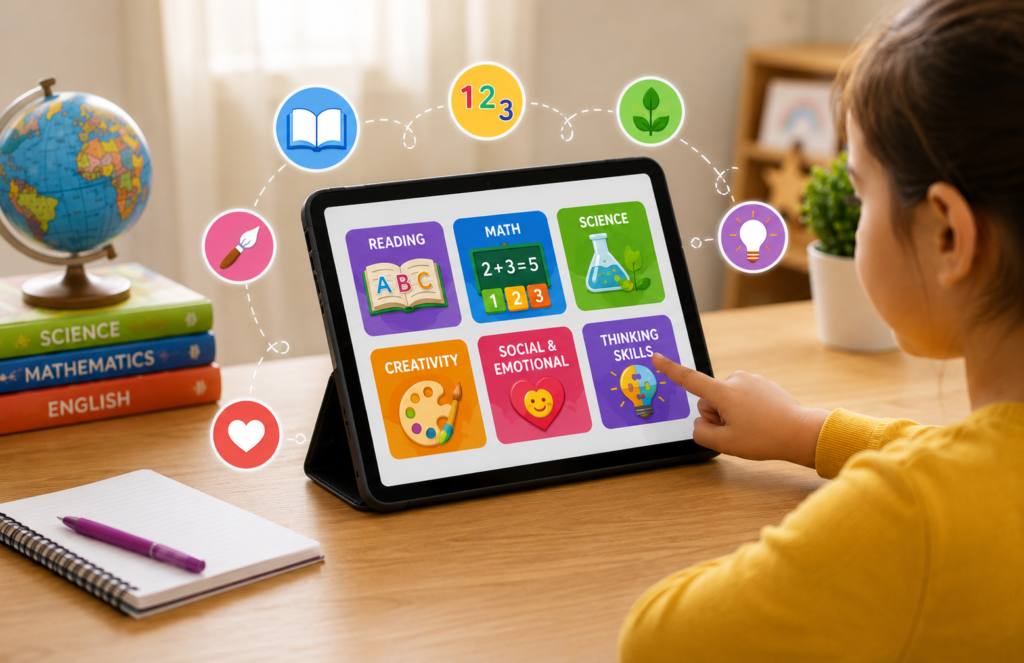
Finding a great educational app for your child is harder than it seems. Thousands of apps claim to make learning fun, but not all of them offer meaningful educational value. The best apps do more than keep children entertained. They help build reading, math, problem-solving, creativity, and critical thinking skills through engaging, age-appropriate activities.
To make your search easier, we’ve compiled the 10 Best Educational Apps for Kids in 2026. Each app on this list was selected based on its learning experience, content quality, ease of use, and overall value for families. Whether you’re looking for a free learning app, a complete homeschool companion, or a fun way to support your child’s education after school, these apps offer something for every age and learning style.
Best Educational Apps for Kids
1. ClassDojo
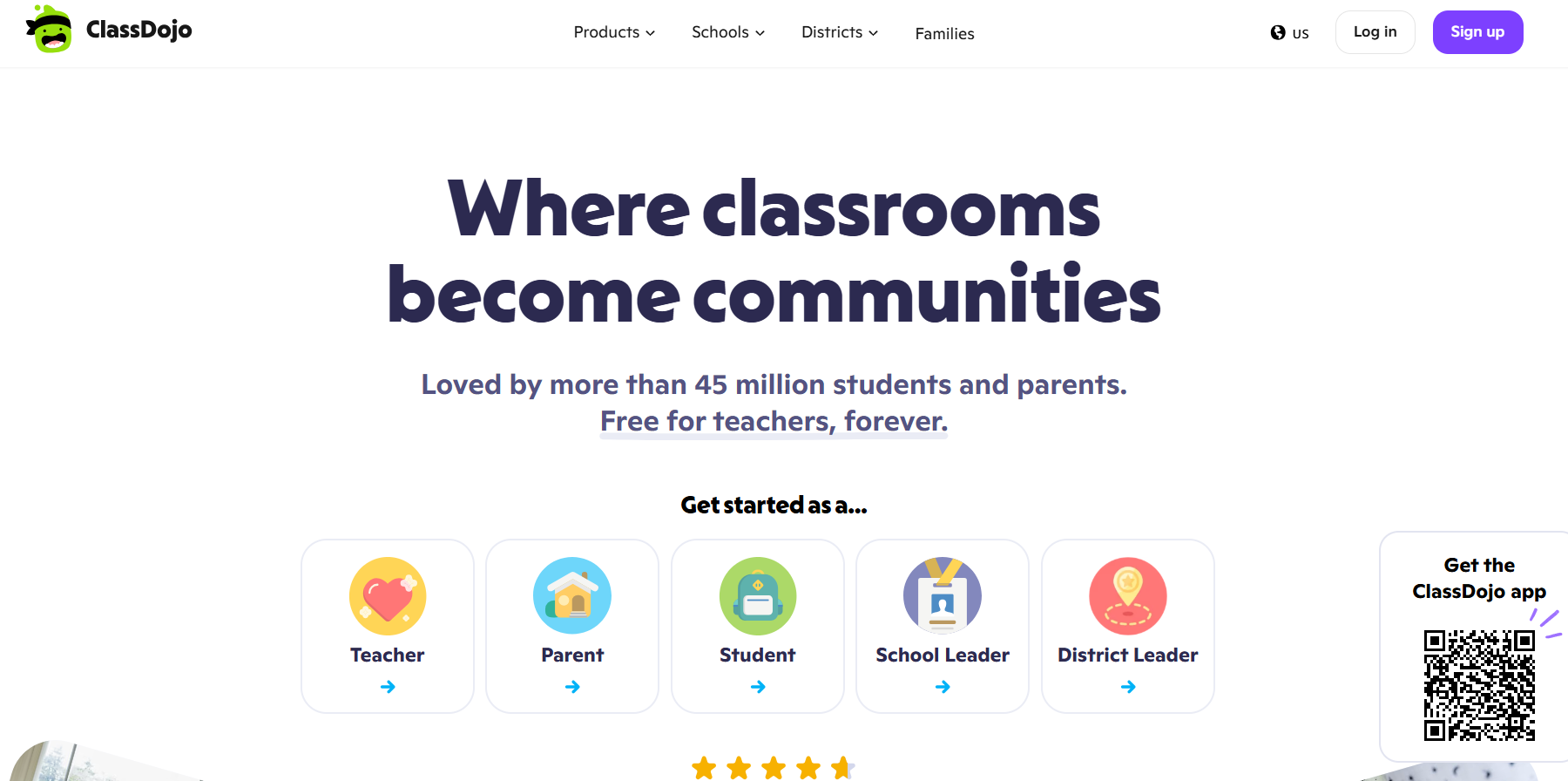
ClassDojo is a classroom communication platform that connects teachers, parents, and students through real-time messaging, behavior tracking, digital portfolios, and daily classroom updates. It operates in 180 countries and supports automatic message translation into over 35 languages.
The core app is entirely free and includes direct teacher messaging, class story updates, and a student points system. The premium ClassDojo Plus tier adds homework help, an interactive book library with 1,000 plus titles, detailed progress reports, and a digital album of classroom memories. ClassDojo’s value depends almost entirely on whether your child’s teacher actively uses it. Without that connection, the app offers much less.
Best For
School-age children whose teachers use ClassDojo. Most relevant for parents of elementary students wanting better visibility into the school day.
Pricing
Core features free for teachers, parents, and students. ClassDojo Plus available via monthly or annual subscription with a 7-day free trial; check the app for current pricing.
2. Duolingo ABC
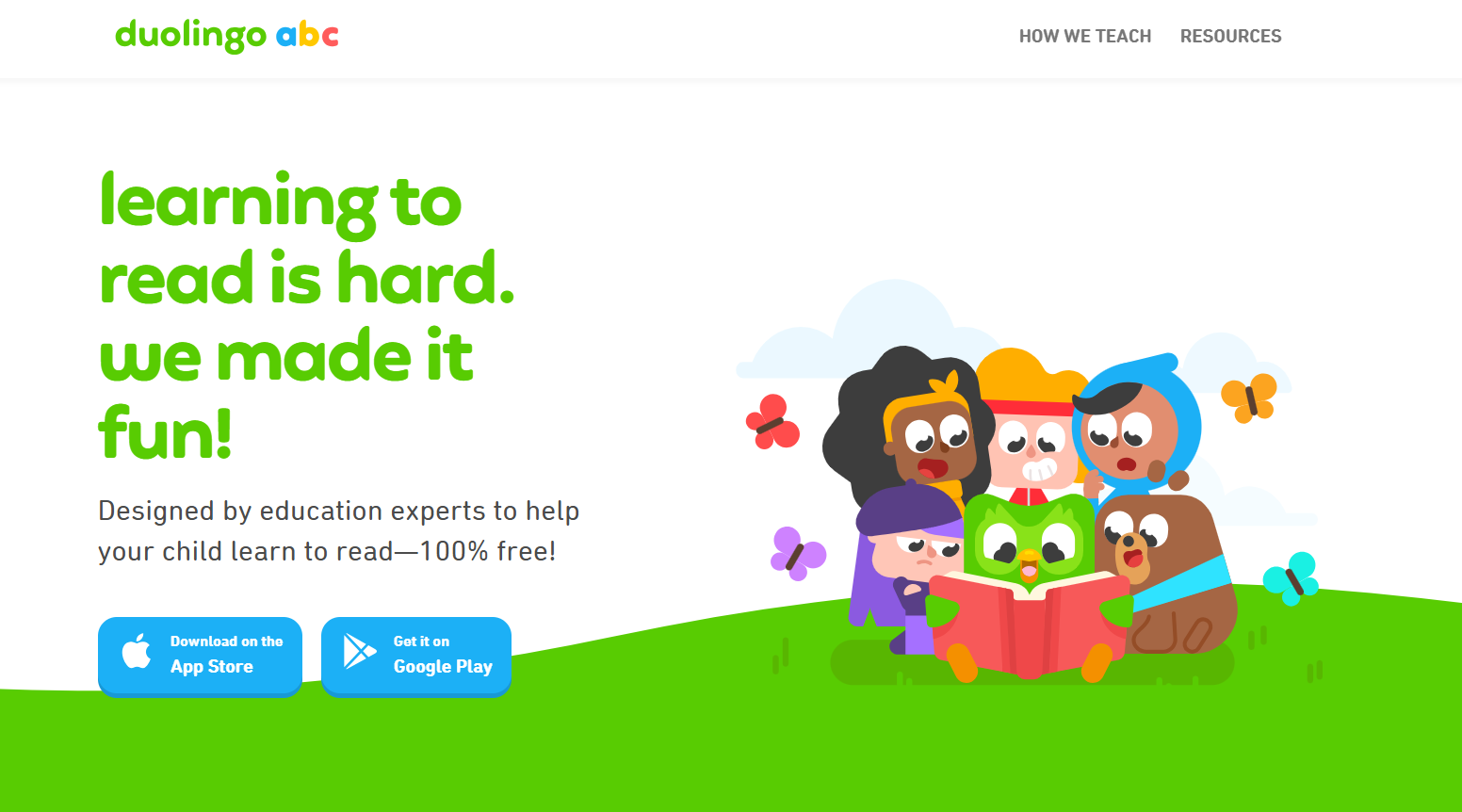
Duolingo ABC is a free, ad-free kids learning app built on the Science of Reading framework. It covers phonics, phonemic awareness, sight words, vocabulary, and early fluency through over 700 bite-sized lessons and interactive stories. The app targets children aged 3 to 8, and every lesson is designed to feel like a game rather than a drill.
Research by Education Development Center shows that kids who used Duolingo ABC for 9 weeks improved their literacy scores by 28%. Speech recognition lets children practice reading words out loud, a feature most free apps skip entirely. One limitation: all children must start from the beginning regardless of their current reading level.
Best For
Children aged 3 to 8 working on phonics and early reading.
Pricing
Completely free. Ad-free. No in-app purchases.
3. DragonBox
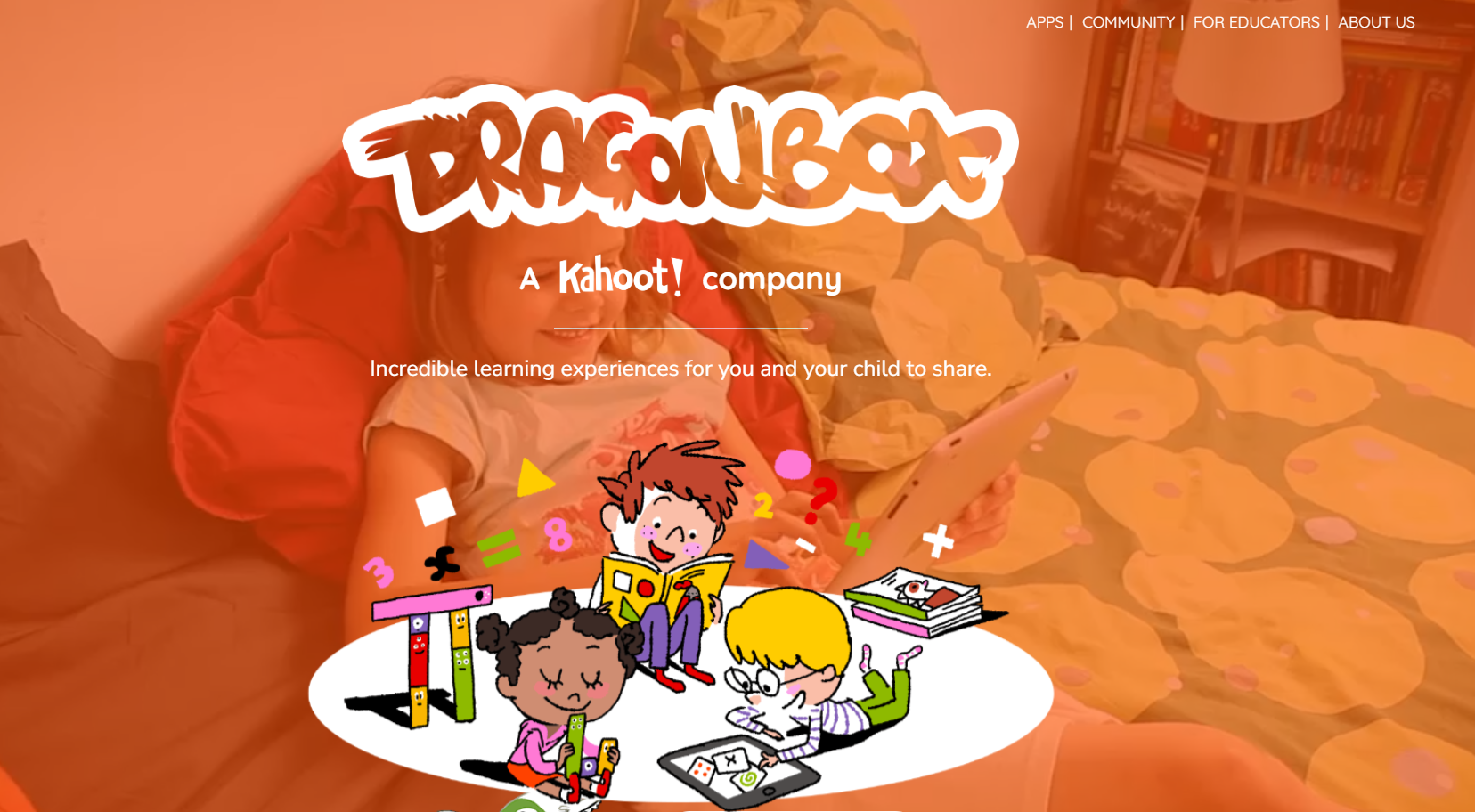
DragonBox is the most creative approach to math apps for kids on this list. It embeds algebra, geometry, and number concepts so deeply inside gameplay that children solve for unknown variables before they understand that is what they are doing. The series was developed by a math teacher alongside a cognitive scientist, and that combination shows throughout every app in the family.
Young children start by isolating a glowing box from other characters on screen, a mechanic that mirrors solving for x without ever using that framing. By the time numbers and symbols appear, the logic already feels natural. One of the most remarkable aspects of the app is how quickly young children can grasp basic algebra concepts. The DragonBox series now sits inside the Kahoot! Kids subscription platform.
Best For
Ages 4 to 13 depending on the app in the series. Algebra apps work as early as age 5 and extend through middle school.
Pricing
Seven-day free trial, then $9.99/month. Individual app purchases also available.
4. PBS Kids Games
PBS Kids Games is a collection of 280 plus free curriculum-based educational games built around characters from Daniel Tiger, Wild Kratts, Sesame Street, Odd Squad, and other PBS shows. Content covers math, reading, science, STEM challenges, creativity, and social-emotional skills. The app is entirely ad-free, works offline, and targets children aged 2 to 8.
The app has won Kidscreen’s Best Games App award in 2019, 2021, 2022, 2024, and 2025, reflecting consistent quality over years rather than a single strong launch. Children can play in both English and Spanish. Some users report occasional freezing or crashes on specific devices, but the core content quality is high.
Best For
Children aged 2 to 8, especially families already engaged with PBS Kids programming.
Pricing
Completely free. Ad-free. No in-app purchases.
5. SplashLearn
SplashLearn is a math app for kids and reading platform covering preschool through Grade 5. It is trusted by over 60 million kids and used in 1 in 3 US schools. The adaptive algorithm draws on over 3 billion answered problems to personalize each child’s experience in real time. The content library includes 4,000 plus math and reading games, activities, and printable worksheets.
Math coverage spans number sense, addition, subtraction, multiplication, fractions, geometry, and word problems. Reading covers phonics, sight words, vocabulary, and comprehension. Teachers and schools get full access free. For home use, the pricing is reasonable but note that multiple users report frustration with auto-renewal policies, so read the subscription terms before signing up.
Best For
Children aged 2 to 11 needing curriculum-aligned practice in math and reading across multiple grades.
Pricing
Free for teachers and schools. Home plans start at $7.99/month for math or reading, or $11.99/month for both. Annual plans available. Seven-day free trial.
6. Monster Math
Monster Math is a dedicated math app for kids built specifically around math fact fluency, meaning the ability to recall and apply math facts accurately without counting strategies. It was designed with input from math fluency researcher Dr. Jennifer Bay-Williams and targets children in grades K through 3.
Rather than drilling through flashcards, the app builds number sense through visual learning and adventure-style gameplay. The neuroinclusive design eliminates loud sounds and flashy animations, making it one of the better options for children with ADHD or sensory sensitivities. Coverage includes addition, subtraction, multiplication, and division, all aligned with Common Core Standards. No time limits, no penalties, and offline play available.
Best For
Children aged 5 to 9 in grades K through 3. Strong choice for neurodivergent learners who need a calmer math practice environment.
Pricing
Free version includes 10 levels per day. Full access costs $59.99/year with a 7-day free trial. Free for teachers.
7. Khan Academy
Khan Academy is a free nonprofit platform covering math, science, computing, humanities, and standardized test prep from early grades through high school. Lessons follow a mastery-based approach, meaning children move forward only when they genuinely understand the material, not when they have simply spent enough time on a topic.
The math coverage alone spans from basic counting through calculus. The science learning apps content covers biology, chemistry, earth science, and physics with video lessons and practice exercises. The parent dashboard shows which skills a child has practiced, how long they spent, and where they need more support. For homeschooling families or children catching up in school, the structured learning paths align with standard US curricula across every grade level.
Best For
Children aged 6 and above through high school. Strong for catch-up math and science, and for homeschooling families.
Pricing
Completely free. No ads. No subscriptions.
8. Tiny Minies
Tiny Minies is an award-winning early learning app for children aged 2 to 6 that covers academics, creative play, mindfulness, and sleep routines in one place. The app holds COPPA certification and a Mom’s Choice Gold Award. Content includes 2,000 plus games, videos, storybooks, guided meditations, memory games, coloring activities, and printable worksheets.
The parental control panel lets parents set screen time limits, track progress for up to five children, and receive personalized development tips. Full offline functionality means no Wi-Fi needed once content is downloaded. The guided meditation and bedtime story content is genuinely unusual in the apps for kids space and useful for families wanting to wind down screen time rather than abruptly end it.
Best For
Toddlers and preschoolers aged 2 to 6. Parents looking for a single app that handles learning, creativity, and emotional wellbeing together.
Pricing
Seven-day free trial with no payment required upfront. Subscription plans vary by region; check the App Store or Google Play for current rates.
9. The Learning Apps
The Learning Apps is a hub of educational games, online games, worksheets, stories, and learning resources for kids developed by Digital Dividend. The platform is available in 103 languages including Arabic, Spanish, and Russian, which makes it one of the more globally accessible options in the children’s education space.
The platform covers a wide range of subjects including math, science, language arts, and social studies through interactive games, quizzes, and activities. Parents can track progress and set learning goals for each child, and teachers get access to lesson plans and assessment tools. All content on The Learning Apps is kid-friendly and designed to be safe for independent use on iPad, iPhone, and Android devices.
Best For
Children across a wide age range. Particularly useful for multilingual families and teachers looking for a broad, free resource hub.
Pricing
Free to access. No subscription required for core content.
10. Tiny Genius
Tiny Genius is a preschool and kindergarten interactive learning app for children aged 1 to 5, offering 1,000 plus learning exercises covering coloring, puzzles, shape recognition, stories, drawing lessons, and quiz-based games. The app is entirely ad-free and built for independent use by very young children.
Voice guidance helps children who cannot yet read navigate lessons without parental assistance. The interface uses calm colors and quiet sounds, a deliberate low-stimulation design that works well for younger or easily overwhelmed learners. Parents can select lessons manually or let the personalized learning route adapt automatically to each child’s level. The app connects to The Learning Apps ecosystem for additional content and resources.
Best For
Children aged 1 to 5. Families seeking a free, ad-free, multilingual option for early preschool and kindergarten basics.
Pricing
Free with a guest account. Full access available with a free sign-up. Premium subscription plans available for additional content.
How to Choose the Right App
Age and subject focus narrow the field quickly. For children under 6, Khan Academy Kids, Tiny Minies, Duolingo ABC, PBS Kids Games, and Tiny Genius all work well without much parental setup per session. For school-age children focused on math specifically, DragonBox and Monster Math outperform general-purpose tools. SplashLearn covers the widest grade range if you want one subscription to grow with your child.
Free options are genuinely strong here. Khan Academy Kids, Duolingo ABC, PBS Kids Games, Tiny Genius, and the main Khan Academy app are all fully free with no paywalls or ads. If you need deeper adaptive features and are comfortable with a subscription, SplashLearn and Monster Math both offer free trials long enough to evaluate fit before committing.
For neurodivergent learners, Monster Math’s calm design and Duolingo ABC’s structured visual approach both reduce sensory overwhelm better than most alternatives. ClassDojo only makes sense if your child’s teacher already uses it at school.
Conclusion
The best educational apps for kids in 2026 make learning feel like the activity itself, not a chore attached to a reward. Across reading, interactive learning apps for math, science, creativity, and emotional development, there is a strong option here for every age group and budget, including several that cost nothing at all.
Pick one app that fits your child’s age and current subject need. Watch them use it for seven minutes without stepping in. If they are moving forward and staying engaged without prompting, you found the right one.