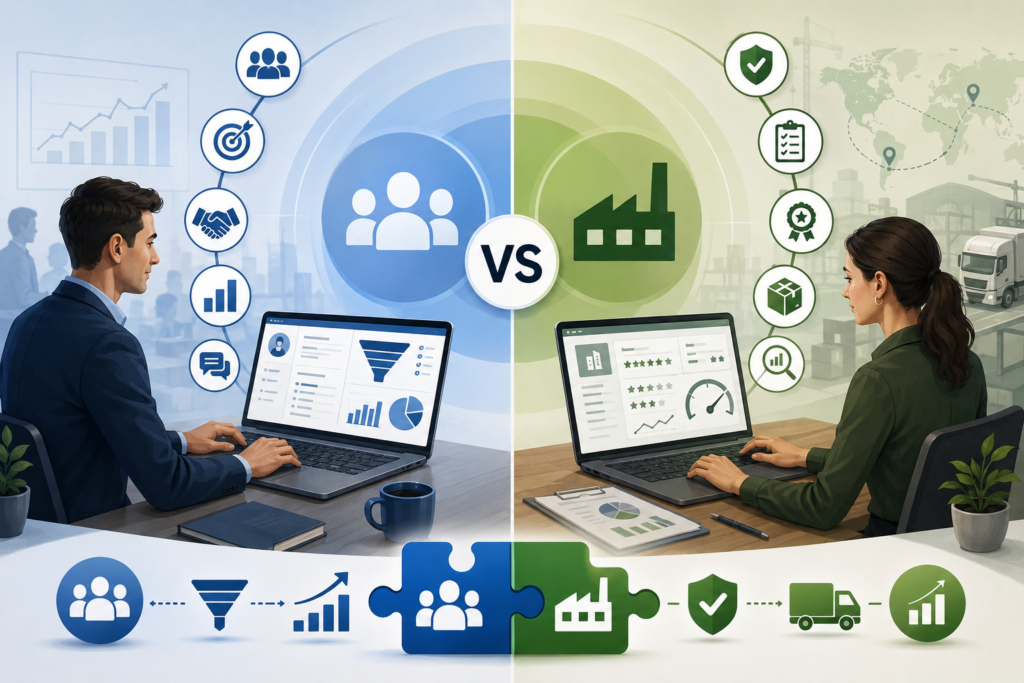
Businesses thrive on relationships. Some relationships generate revenue, while others ensure products and services can be delivered efficiently. This is where CRM and SRM come into play. Although both systems focus on relationship management, they serve very different purposes.
Many organizations initially assume that Customer Relationship Management (CRM) and Supplier Relationship Management (SRM) are interchangeable. In reality, they solve distinct business challenges. A CRM helps companies build stronger customer relationships and increase sales, while an SRM helps organizations manage suppliers, reduce risks, and improve operational efficiency.
Understanding the differences between CRM and SRM can help businesses invest in the right technology and create stronger relationships across their entire ecosystem.
What Is CRM?
CRM stands for Customer Relationship Management. It is software built to manage every interaction your business has with the people who buy from you, or who might buy from you in the future.
My CRM lives and breathes sales. Every morning I check deal stages, follow up tasks, and revenue forecasts. The entire tool is structured around one outcome: closing deals and keeping the customers I already have.
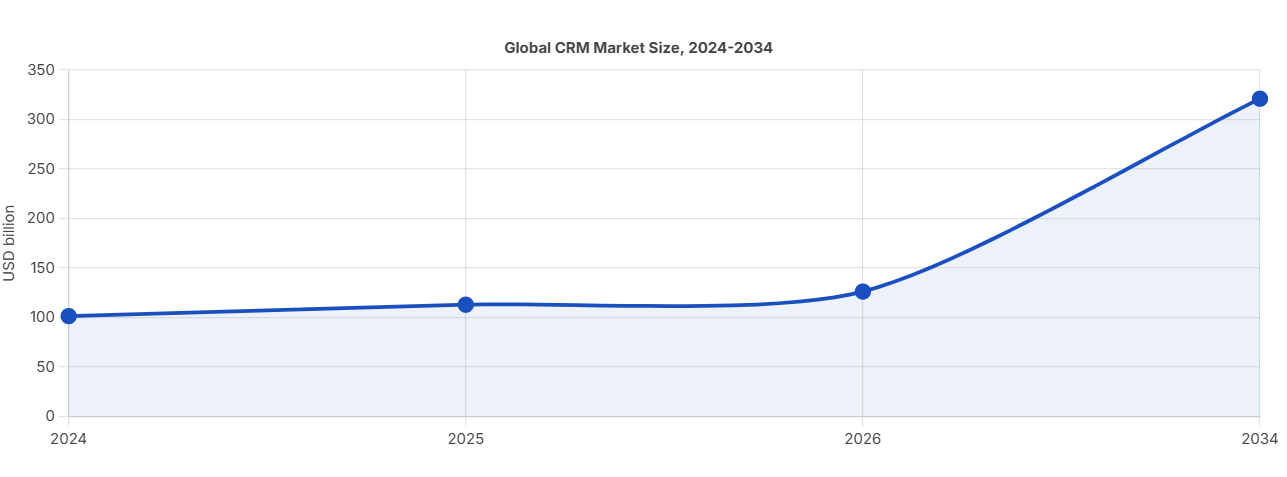
The CRM software market is massive and still growing fast. Data from Companies History shows that the global CRM market reached approximately $112.91 billion in 2025 and is expected to reach $126.17 billion in 2026. Adoption reflects that scale too. 91% of companies with 10 or more employees now run a CRM system, making it one of the most widely used categories of business software anywhere. Salesforce continues to lead the market with roughly 20.7% share, a position IDC’s Worldwide Semiannual Software Tracker confirms it has held for 13 consecutive years, while HubSpot has become the fastest growing major challenger with 288,706 paying customers and around $3.1 billion in trailing twelve month revenue heading into 2026.
Read also over blog : Top 10 Free CRM Software for Wholesale Distributors
What CRM Is Actually Built For
From using one daily, here is what a CRM does well:
- Stores customer contact details, purchase history, and communication logs
- Tracks deals moving through a sales pipeline
- Automates follow ups so leads do not go cold
- Reports on revenue, conversion rates, and rep performance
- Manages post sale support and renewal activity to protect customer retention
A CRM exists because customer relationships are transactional. You sell, they buy, and the entire system is designed to make that exchange repeatable and measurable.
What Is SRM? (Supplier Relationship Management)
SRM, in the procurement sense, stands for Supplier Relationship Management. It is software built for procurement and supply chain teams to manage, evaluate, and strengthen relationships with the vendors and suppliers a business depends on.
Quick flag before I go further, because I want to be upfront about this: SRM sometimes refers to Stakeholder Relationship Management in PR and communications contexts instead. That is a different category of software entirely, built for managing relationships with regulators, communities, and government bodies rather than vendors. If procurement and supply chain are your focus, you are in the right place. This article covers Supplier Relationship Management specifically, since that is the tool I have actually implemented and used.
A dedicated SRM platform is a specialized digital platform that helps organizations systematically manage, evaluate, and optimize their relationships with suppliers and vendors, replacing the spreadsheet chaos most procurement teams start with.
What SRM Software Actually Does
After switching our supplier data out of spreadsheets and into a dedicated SRM tool, here is what changed for my procurement workflow:
- Centralizes supplier information including contact details, certifications, and onboarding documents in one place
- Tracks supplier performance using scorecards built around quality, delivery, cost, and reliability metrics
- Monitors supplier risk by pulling in financial health signals, sanctions checks, and compliance data
- Manages audits and corrective actions with structured checklists and documented evidence
- Handles contract and certification tracking, including automatic alerts before a certificate or agreement expires
One of the clearest distinctions I have found: a CRM is mainly used by sales and marketing teams to manage relationships with customers, while SRM is mainly used by procurement and supply chain teams to optimize relationships with suppliers, focusing on collaborative partnerships, operational efficiency, supplier performance monitoring, and risk mitigation.
Why Procurement Teams Are Investing in SRM Right Now
This is not just a specialized industry trend. According to Gartner, 88% of procurement leaders significantly increased their focus on supplier collaboration during a recent two-year period. Yet only 35% of CPOs currently use a structured model to distinguish their most valuable suppliers, suggesting that many organizations understand the challenge but have not adopted the right tools.
The market reflects this shift. Estimates vary by research firm and methodology, but most current reports place the supplier relationship management software market somewhere in the low double digit billions for 2025 and 2026, with consistent double digit annual growth projected through the early 2030s as organizations across various sectors increasingly leverage SRM platforms to strengthen vendor communication, ensure continuity, and foster competitive advantage through supplier driven innovation.
What is driving that growth on the ground? A few real factors I have seen firsthand and that show up consistently across procurement research:
- Supply chain disruption. Increasing complexity of global supply chains and rising need for supplier transparency are accelerating SRM adoption.
- Regulatory pressure. Compliance frameworks tied to sustainability and supply chain due diligence are pushing companies to track supplier documentation more rigorously than a spreadsheet allows.
- AI driven risk monitoring. AI in procurement is enabling SRM software to move from manual oversight to intelligent orchestration, improving supplier risk management by continuously analyzing data and surfacing insights.
CRM vs SRM: The Core Differences
1. Who You Are Managing
Your CRM is full of leads, prospects, and customers, the people who give you revenue. Your SRM is full of vendors and suppliers, the people who give you goods, materials, or services. CRM and SRM navigate common territory with roles reversed, since CRM focuses on sellers cultivating relationships with customers while SRM centers on buyers nurturing ties with suppliers.
2. Purpose
A CRM is built to drive revenue and customer retention. An SRM is built to drive supplier performance, reduce procurement risk, and strengthen supply chain resilience. Modern SRM software is used to manage supplier onboarding, performance evaluation, risk monitoring, contract tracking, and collaboration, none of which a standard CRM is designed to handle.
3. Performance Tracking
CRMs report on pipeline value, win rates, and deal size. SRMs report on supplier scorecards built around quality, delivery reliability, cost, and compliance. Supplier Relationship Management focuses specifically on the performance, risk, and collaboration aspects of vendors, which is a fundamentally different reporting structure than anything a sales focused CRM produces.
4. Risk and Compliance
This is the area where I noticed the biggest gap when I tried forcing a CRM to do supplier work. A real SRM platform pulls in financial health indicators, sanctions and politically exposed persons lists, adverse media, and ESG and country risk metrics, feeding supplier risk profiles and alerts automatically. A CRM has no native concept of any of this.
5. Audits and Corrective Actions
SRM platforms are built to manage audits with structured checklists and rating schemes, capturing objective evidence on site such as photos and signatures, then auto-compiling reports and publishing corrective actions that roll directly into supplier scorecards. CRMs simply do not have a workflow for this, because customer relationships rarely require formal audits.
Read also over blog : Types of CRM – Which CRM is Best for Your Business?
Can You Manage Suppliers in a CRM Instead?
Technically, yes, you can store a supplier’s contact information in a CRM. I tried exactly that before switching, and it broke down fast. You can store supplier contacts in a CRM, but it lacks native capabilities for audits, quality KPIs, compliance workflows, third party risk data, and corrective actions, since those are core to SRM rather than CRM.
The deeper issue is structural. A CRM’s entire data model assumes a sales funnel: lead, opportunity, closed deal. Suppliers do not move through a funnel. They move through onboarding, qualification, ongoing performance review, and periodic risk reassessment, a completely different lifecycle that a sales tool was never designed to track.
CRM vs SRM: Side by Side Comparison
| Factor | CRM (Customer Relationship Management) | SRM (Supplier Relationship Management) |
| Primary users | Sales and marketing teams | Procurement and supply chain teams |
| Who is tracked | Leads, prospects, customers | Vendors and suppliers |
| Core goal | Revenue growth and retention | Supplier performance and risk reduction |
| Key metrics | Pipeline value, win rate, conversion | Quality, delivery, cost, compliance scorecards |
| Risk handling | Minimal to none | Financial, sanctions, ESG, and compliance risk monitoring |
| Audit capability | Not built in | Structured audits with corrective action tracking |
| Typical market leaders | Salesforce, HubSpot, Zoho | Kodiak Hub, Ivalua, SAP Ariba, Coupa, Precoro |
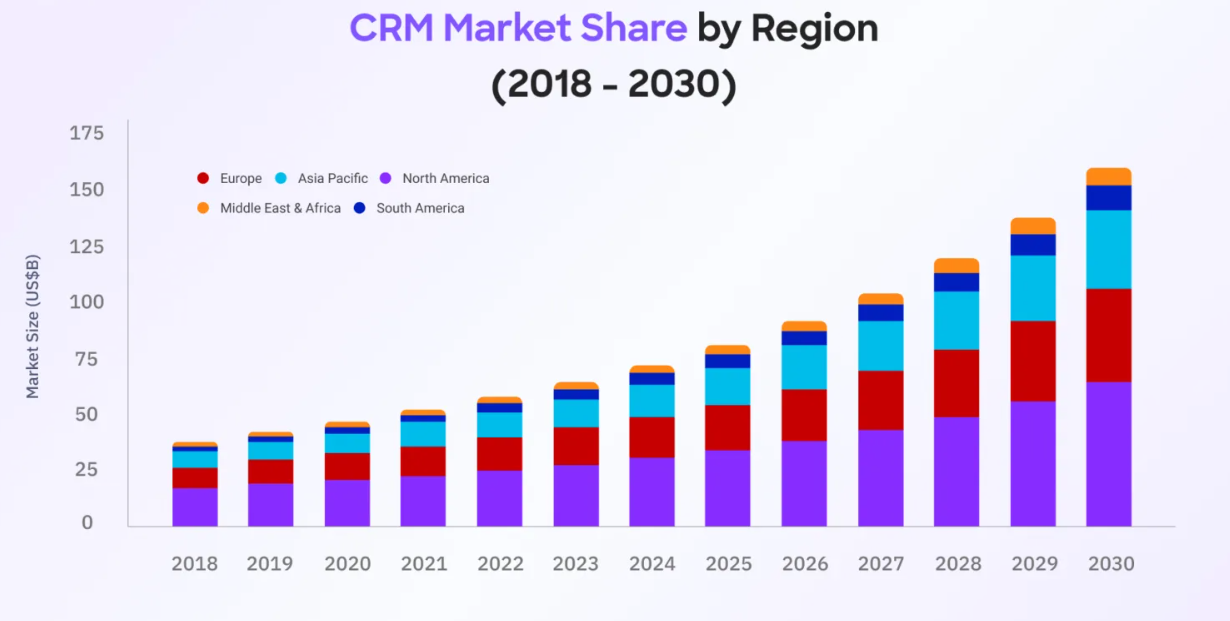
CRM Market Share by Region
When You Need a CRM
If your business sells to customers, you need a CRM. There is no real way around this once your customer base outgrows a spreadsheet. Data from sellerscommerce shows that 71% of small businesses have already adopted CRM systems, with 65% implementing one within their first five years, and businesses report earning $8.71 in return for every $1 spent on CRM software, which is a strong case for adoption once your sales process gets complex enough to need tracking.
Read also over blog : Top 10 Healthcare CRM Software for Clinics & Hospitals
When You Need an SRM
You need a supplier relationship management tool if any of the following apply to your business:
- You manage more than a handful of suppliers and tracking them in spreadsheets has become unreliable
- You need to track supplier certifications, audits, or compliance documentation
- Your industry is regulated, such as manufacturing, food and beverage, pharmaceuticals, or automotive, where supplier management becomes part of procurement strategy rather than a reporting add-on in ISO or FDA regulated environments
- You need visibility into supplier risk, including financial stability, sanctions exposure, or ESG compliance
- You are trying to reduce procurement costs through better supplier negotiation and performance data
Effective SRM improves supplier performance, strengthens supplier collaboration, and turns suppliers into contributors to business value rather than transactional vendors, which is a meaningfully different outcome than what a CRM is built to deliver.
Do You Need Both CRM and SRM?
In most growing businesses, yes. Most companies use both: CRM for revenue-facing teams, and SRM for procurement, quality, and sustainability, and the two systems coexist and integrate rather than compete. I run my CRM for sales conversations and my SRM for every supplier relationship, certification, and audit, and the two have never overlapped in a way that caused confusion. They were never trying to do the same job.
Conclusion
If you only remember one thing from this article, make it this: a CRM and an SRM solve two completely different problems, even though both involve “managing relationships.” A CRM exists because customers give you revenue. An SRM exists because suppliers give you risk, and that risk needs structured monitoring, not a sales pipeline bolted on as an afterthought.
Ask yourself one simple question before you buy either tool. Is the relationship you are managing about acquiring revenue, or about securing the goods, materials, and services your business depends on? If it is revenue, get a CRM. If it is supply, get a dedicated SRM. Trying to make one tool do both jobs is exactly the mistake I made early on, and it cost me real time fixing spreadsheets and chasing supplier documents that should have been tracked automatically from day one.
Frequently Asked Questions
Is SRM just a CRM for suppliers?
Not really. SRM adds supplier scorecards, audits, and compliance tracking that a standard CRM does not natively support.
Can a small business skip SRM and just use a CRM?
Yes, if you only manage a handful of suppliers. SRM becomes valuable once manual tracking of performance and risk gets unreliable.
Does SRM only matter for manufacturing companies?
No. Retail, food and beverage, energy, and services all benefit, though regulated industries with compliance requirements tend to adopt SRM earliest.
What is the difference between SRM and Contract Lifecycle Management?
SRM focuses on supplier performance, risk, and collaboration, while Contract Lifecycle Management focuses on drafting, negotiating, executing, and storing legal agreements.
How does SRM actually deliver ROI?
ROI typically comes from better supplier pricing, earlier risk identification that avoids disruption costs, and operational efficiency from structured sourcing.
What KPIs should I track in an SRM platform?
Track cost savings from negotiations, procurement cycle time, inventory turnover, quality of goods received, and supplier innovation contributions as a baseline.
Is SRM software expensive to implement?
Pricing varies by vendor, company size, and supplier volume. Request quotes directly, since published price lists rarely reflect real implementation costs accurately.
Can I start SRM without buying new software?
Yes. Nominate one single source of truth, usually your ERP system, to pull supplier data from before adding dedicated tools.
What third party data does SRM use that CRM does not?
SRM commonly ingests financial health indicators, sanctions and PEP lists, adverse media, and ESG and country risk metrics automatically.
Do CRM and SRM ever integrate with each other?
Yes. Most companies run both, since CRM and SRM coexist and integrate rather than compete across revenue and procurement teams.