For most SaaS startups, growth feels like a constant trade-off. Marketing budgets are tight, teams are small, and every decision needs to justify its return. Paid ads can generate short-term visibility, but costs rise quickly. Social media requires consistent effort with unpredictable outcomes. Partnerships take time to mature.
SEO works differently
When approached with the right framework, SEO and their Services becomes a compounding asset. Content created today can bring qualified users for years without ongoing spend. The challenge for startups is not whether SEO works, but how to make it work without enterprise-level budgets or large content teams.
This is where a focused SaaS SEO framework matters. Early-stage companies do not need hundreds of pages or expensive tools. They need a clear understanding of their audience, intent-driven content, and a system built around real user problems. This guide explains how SaaS startups can build sustainable organic visibility and compete with larger brands by being smarter, not louder.
How SaaS SEO Is Different From Traditional SEO
SaaS SEO is not about chasing traffic numbers. Unlike blogs or ecommerce sites, SaaS products often have longer sales cycles, educated buyers, and multiple stakeholders involved in decisions. A single page rarely converts a user instantly.
Most potential customers research before they buy. They compare tools, read guides, look for alternatives, and validate claims. This means SaaS SEO must support the entire buyer journey, not just the first click.
Traditional SEO often focuses on ranking for broad keywords. SaaS SEO focuses on relevance and intent. Informational content builds awareness and trust, while solution-focused and comparison content helps users move closer to a decision. Rankings matter, but alignment with user intent matters more.
Foundation: Understanding Your Ideal SaaS Buyer
Before creating content or researching keywords, startups must understand who they are building for.
Start by clearly defining the problems your product solves. Then analyze how your ideal users describe those problems in real searches. Most SaaS buyers do not start by searching for a tool name. They search for better workflows, solutions to inefficiencies, or ways to fix a specific issue.
For example, instead of searching “CRM software,” a user may search for “how to track leads without spreadsheets” or “simple sales pipeline for small teams.” These searches reveal intent and readiness.
Mapping problems to search intent helps startups avoid wasted effort. Content aligned with real pain points attracts users who are already looking for answers, not just browsing.
Read This :- The Next Frontier of SaaS CRM: AI, Automation, and Predictive Power.
Keyword Strategy for Startups With Small Budgets
Competing for high-volume keywords dominated by established SaaS brands is rarely effective for early-stage companies. Instead, startups should focus on keywords that show clear intent and lower competition.
High-value opportunities often include:
- Use-case-based searches
- “How to” queries related to specific workflows
- Comparison and alternative keywords
- Feature-level problem searches
These keywords may bring less traffic, but the traffic is more qualified. Users searching with specific intent are more likely to engage, return, and eventually convert.
A smaller keyword set with strong intent often outperforms a large list of generic terms. Quality matters more than volume.
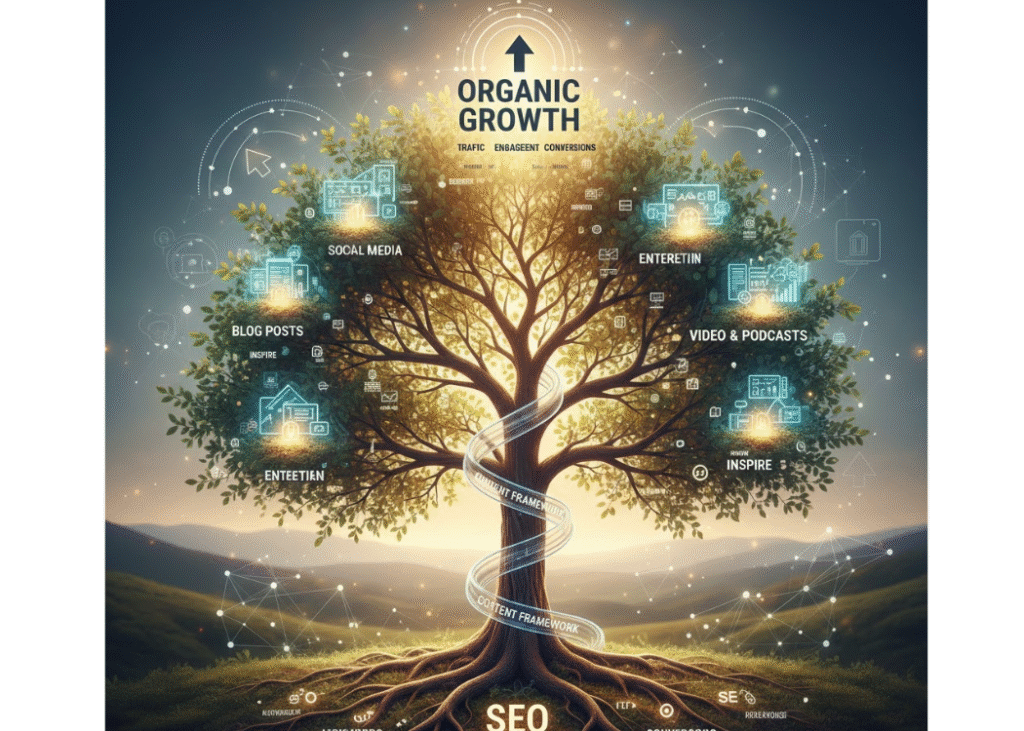
Content Framework That Drives Organic Growth
Educational Content
Educational content sits at the top of the funnel. Its role is to explain problems, challenges, and best practices without pushing the product aggressively. This content builds trust and positions the brand as a helpful guide.
Well-written educational articles answer common questions clearly and practically. When users feel understood, they spend more time on the site and explore deeper content.
Solution-Oriented Content
Once users understand the problem, they start looking for solutions. This is where solution-oriented content becomes critical.
Use-case guides, workflow explanations, and category-level comparisons perform well here. These pages connect user problems with practical solutions and naturally introduce the product as one option among others.
Subtle positioning works better than direct selling. Honest explanations build credibility and reduce resistance.
Conversion-Support Content
Decision-stage content helps users choose. Comparison pages, alternatives, pricing explanations, and feature breakdowns reduce uncertainty and answer final questions.
This content should be transparent and balanced. Acknowledging limitations builds trust and often increases conversions in the long run. Users value clarity more than exaggerated promises.
Building Topical Authority Without Publishing at Scale
Many startups believe they need to publish constantly to compete. In reality, depth and structure matter more than volume.
Choose one core topic closely aligned with your product. Create a comprehensive primary guide that covers the subject in detail. Then support it with smaller articles that address related subtopics and questions.
Internal linking between these pages strengthens topical relevance and helps search engines understand your expertise. This approach builds authority gradually without overwhelming limited teams.
Consistency and focus outperform quantity.
Product-Led SEO for SaaS Startups
Product pages are often underutilized in SEO strategies. Instead of short promotional copy, feature and product pages should educate users.
Explain real use cases, common scenarios, and how features solve specific problems. Adding FAQs, examples, and clear explanations makes these pages more useful and searchable.
When users find answers directly on product pages, trust increases and bounce rates decrease. Every page should help users understand how the product fits into their workflow, not just what it claims to do.
EEAT Signals That Improve Trust and Rankings
Search engines increasingly reward content that demonstrates experience, expertise, authority, and trustworthiness.
SaaS startups can build these signals without big brand recognition by focusing on transparency and accuracy. Include author bios with relevant experience. Clearly explain who the product is for and who it may not suit. Keep content updated and factually correct.
Clear company information, accessible contact details, and honest messaging improve both user confidence and search visibility. Trust is built through consistency, not claims.
Link Building Without Big Budgets
Link building does not require expensive campaigns. Startups can earn links through partnerships, integrations, and founder-led thought leadership.
Guest articles, collaborative content, and practical resources attract links naturally when they offer real value. Content that solves problems or explains complex topics clearly is more likely to be referenced.
Instead of chasing links, focus on creating content worth citing. Promotion becomes easier when the content genuinely helps others.
Measuring SEO Success the Right Way
Traffic alone is not a meaningful success metric for SaaS SEO. Startups should track indicators tied to business outcomes, such as:
- Organic signups and demo requests
- Keyword movement related to core use cases
- Content that assists conversions across the funnel
This data helps refine strategy and prioritize what drives real growth, not just visibility.
Common SaaS SEO Mistakes Startups Should Avoid
Many startups fail by chasing high-volume keywords too early. Others publish content without clear intent or ignore internal linking entirely.
Another common mistake is treating SEO as a one-time task. SEO rewards consistency, relevance, and long-term focus. Shortcuts rarely work.
Building a solid foundation first leads to sustainable results.
Conclusion
Ranking in SaaS does not require big budgets or massive teams. It requires understanding users, solving real problems, and building content with purpose.
A clear SaaS SEO framework allows startups to grow steadily, earn trust, and compete with larger players over time. Start small, stay focused, and let compounding do the work.
SEO success is not instant, but for startups willing to invest in the right system, it becomes one of the most reliable growth channels available.