Search behavior has changed fundamentally. Users are no longer browsing ten blue links to find answers. Instead, Google increasingly delivers direct responses through AI Overviews, summarizing information before a click ever happens. This shift has raised the bar for what qualifies as high-quality, trustworthy, and reference-worthy content.
For website owners and publishers, this means visibility depends less on isolated rankings and more on whether content is clear, accurate, and structured well enough to be interpreted and summarized by AI systems. An SEO audit that ignores this reality risks becoming outdated the moment it is completed.
An SEO Audit Checklist for Google AI Overviews (AEO) focuses on more than performance metrics. It evaluates whether your site communicates expertise, satisfies intent, and presents information in a format that search engines can confidently surface. This guide explains how to approach SEO audits in the AI search era, covering definitions, importance, audit types, tools, and a detailed checklist designed for long-term organic stability.
Read this:- SaaS SEO Framework for Startups: How to Rank Without Big Budgets
Sections Covered in This Guide
- What Is an SEO Audit?
- Why an SEO Audit Is Necessary in the AI Search Era
- Understanding Google AI Overviews (AEO)
- How SEO Audits Have Evolved for AEO
- Types of SEO Audits
- SEO Audit Checklist for Google AI Overviews (AEO)
- Tools Commonly Used for SEO and AEO Audits
1. What Is an SEO Audit?
An SEO audit is a comprehensive review of a website’s ability to perform in search engines. It assesses how effectively a site can be discovered, understood, and trusted by search systems while delivering meaningful value to users.
Traditionally, SEO audits focused heavily on technical fixes and keyword placement. While those elements remain important, modern audits go further by evaluating whether content is complete, whether pages align with real search intent, and whether a site demonstrates credibility across its subject areas.
A strong SEO audit answers three critical questions.
- Can search engines access and interpret the site without friction?
- Does the content genuinely answer what users are searching for?
- Does the site demonstrate authority and reliability over time?
In the context of AI Overviews, these questions determine whether content is merely indexed or actively referenced.
2. Why an SEO Audit Is Necessary in the AI Search Era
AI-driven search results have reduced the margin for error. Pages that once ranked despite thin explanations or unclear structure are now less likely to be surfaced in AI summaries.
An SEO audit is necessary because it helps you achieve the following outcomes.
- Identify content that lacks clarity or completeness.
- Detecting technical issues that weaken AI confidence.
- Improve how information is presented for summarization.
- Maintain visibility as search layouts evolve.
Without regular audits, sites risk losing visibility not because of penalties, but because competitors provide clearer, more trustworthy answers. An audit ensures your content continues to meet the expectations of both users and AI-powered search systems.
3. Understanding Google AI Overviews (AEO)
Google AI Overviews are designed to answer complex queries by synthesizing information from multiple trusted sources. Instead of highlighting a single page, Google generates a summarized response and cites supporting content.
Key characteristics of AI Overviews include the following points.
- A preference for factual, well-structured explanations.
- An emphasis on topical authority rather than isolated keywords.
- Greater scrutiny of accuracy and consistency.
Unlike traditional featured snippets, AI Overviews evaluate content holistically. Pages that lack depth, context, or credibility are unlikely to be referenced, even if they rank well organically.
4. How SEO Audits Have Evolved for AEO
SEO audits have shifted from mechanical optimization to strategic evaluation. In an AEO-focused audit, success depends on how effectively content communicates meaning.
Modern audits now prioritize the following factors.
- Intent fulfillment over keyword targeting.
- Topic coverage instead of single-page optimization.
- Readability and structure over length.
- Trust signals over raw link volume.
This evolution reflects how AI systems interpret language. Content that explains concepts clearly, builds logically, and stays accurate over time is more likely to be selected for AI summaries.
5. Types of SEO Audits
5.1 Technical SEO Audit
A technical SEO audit ensures that nothing prevents search engines from accessing or rendering your content. It focuses on crawlability and indexation status, clean URL structures and canonicalization, page speed, Core Web Vitals, mobile performance, secure connections, and server stability.
Technical reliability forms the foundation of AI trust. If a page loads slowly or renders inconsistently, it becomes a weaker candidate for AI Overviews.
5.2 On-Page SEO Audit
On-page audits examine how individual pages communicate relevance and clarity. This includes accurate and descriptive title tags, meta descriptions that reflect real content value, proper heading hierarchy for logical flow, and natural integration of relevant terms.
For AI Overviews, structure matters as much as relevance. Clear headings and organized sections help AI systems extract meaning efficiently.
5.3 Content and Quality Audit
Content audits evaluate whether pages deserve visibility. They focus on depth of explanation and completeness, original insights, examples or practical guidance, removal of outdated or redundant content, and alignment with current user expectations.
AI systems favor content that explains topics thoroughly rather than superficially. Thin pages often fail to meet this standard.
5.4 Authority and Trust Audit
Authority audits measure whether a site consistently demonstrates expertise. They assess author transparency and credentials, brand consistency across topics, quality and relevance of backlinks, and external mentions and citations.
Trust is cumulative. A single strong page is less effective than a site that demonstrates expertise across an entire subject area.
5.5 AI Readiness (AEO) Audit
An AEO audit evaluates how well content can be summarized without losing accuracy. It looks at clear definitions and explanations, logical sequencing of ideas, use of lists, steps, and summaries, and avoidance of exaggerated or ambiguous claims.
AI readiness determines whether your content can be confidently referenced.
6. SEO Audit Checklist for Google AI Overviews (AEO)
6.1 Technical Foundation Checklist
Pages are accessible to crawlers without restrictions. There are no duplicate or conflicting canonical signals. Pages maintain fast load times and stable layouts. Mobile-friendly design ensures readable text and smooth interaction.
Technical clarity reduces friction and improves AI confidence.
6.2 Content Structure and Readability Checklist
Each page focuses on one clear primary topic. Headings reflect real questions users ask. Paragraphs remain short with focused explanations. Formatting stays consistent for easy scanning.
Well-structured content improves comprehension for both users and AI systems.
6.3 Search Intent Alignment Checklist
User intent is clearly identified before writing begins. Direct answers appear early in each section. Supporting explanations add depth. No filler content distracts from the main topic.
Intent satisfaction is a primary signal for AI selection.
6.4 E-E-A-T Signals Checklist
Content includes author bylines with relevant expertise. Information is based on experience, research, or practice. Details remain accurate and up to date. Site ownership and purpose are transparent.
Strong E-E-A-T signals increase credibility in AI-driven results.
6.5 Semantic and Context Optimization Checklist
Related concepts and terminology are used naturally. Subtopics users expect are fully covered. Internal links reinforce topical relevance. Language remains consistent across related pages.
Semantic depth helps AI understand context rather than isolated terms.
6.6 AI Overview Optimization Checklist
Definitions are written in clear, neutral language. Bullet points and numbered steps are used where appropriate. Section summaries reinforce key ideas. Overly promotional phrasing is avoided.
Content that reads cleanly is easier to summarize accurately.
7. Tools Commonly Used for SEO Audits Checklist and AEO.
7.1 Google Search Console
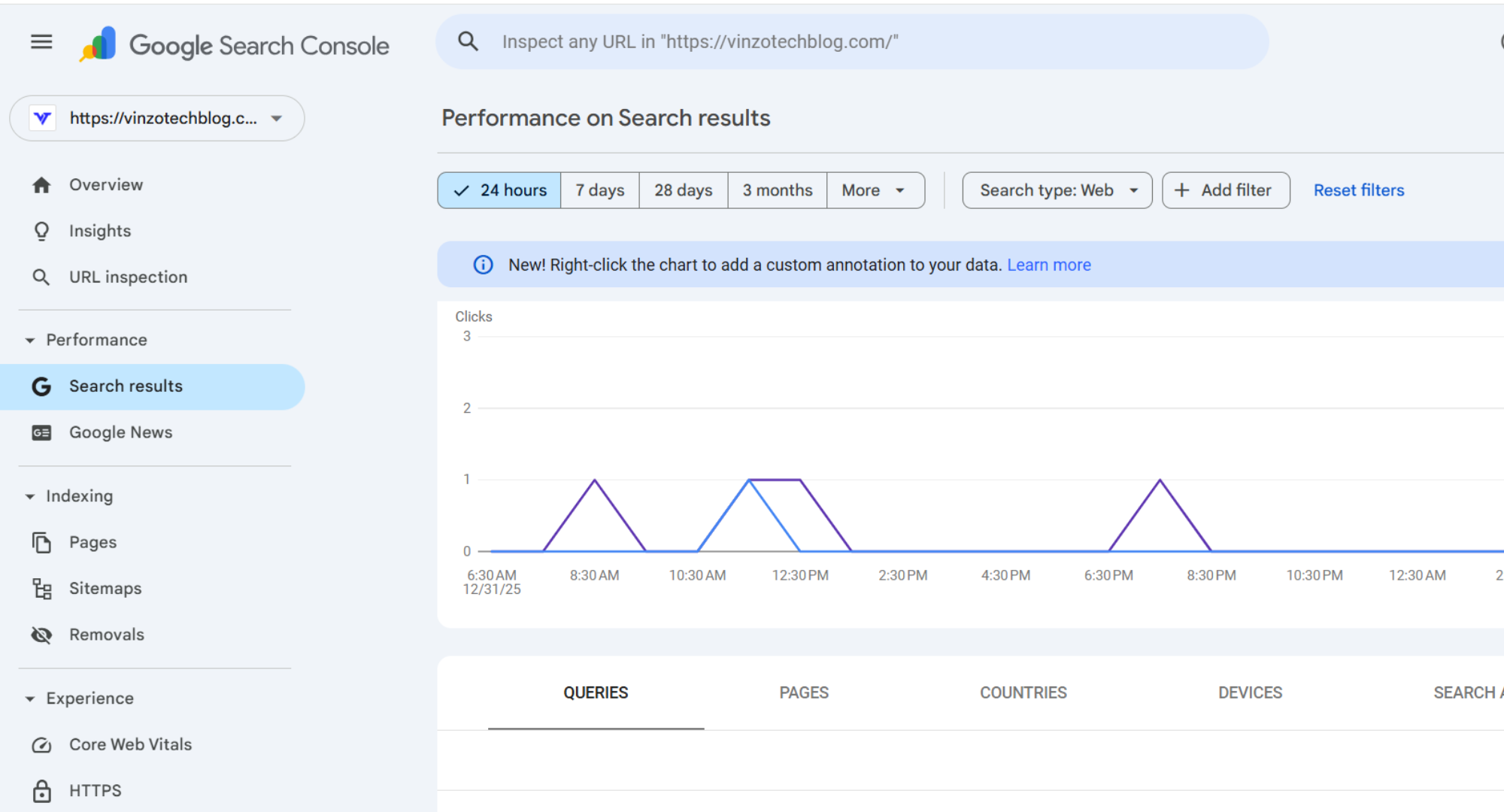
Google Search Console serves as the primary source of truth for how Google views your website. It reflects indexing, visibility, and performance in search results, making it essential for both SEO and AEO audits.
Its key features include indexing and page coverage reports, search performance data by query and page, crawl error detection, Core Web Vitals monitoring, and alerts for manual actions and security issues.
In SEO and AEO audits, it is used to identify pages eligible for AI Overviews based on impressions and query intent, detect indexing gaps, analyze queries with impressions but low clicks, and monitor performance changes after updates.
AI-generated summaries rely on indexed, trusted content. Pages with crawl issues, weak engagement, or poor performance signals are less likely to be surfaced in AI Overviews.
7.2 Google Analytics
Google Analytics measures how users interact with content after arriving from search. While it does not influence rankings directly, it provides behavioral signals that help refine content quality and intent alignment.
It offers engagement metrics, traffic source analysis, page-level performance insights, and user behavior paths.
In audits, it helps identify pages with high impressions but low engagement, evaluate intent satisfaction, detect pages needing clearer structure, and compare informational versus transactional performance.
Content that fails to engage users often lacks clarity or completeness. Improving engagement strengthens content quality, which indirectly supports AI selection.
7.3 Screaming Frog SEO Spider
Screaming Frog simulates how search engines crawl a website. It uncovers technical and structural issues at scale through full-site crawling, detection of broken links, metadata analysis, duplicate content identification, and structured data validation.
It is used to identify pages with weak heading structures, detect thin or duplicate content, ensure consistent metadata, and validate internal linking for topical clarity.
AI systems rely on clean structure. Pages with broken elements or unclear hierarchy are less reliable sources for summarization.
7.4 Ahrefs

Ahrefs evaluates authority, backlinks, and competitive positioning. It provides backlink analysis, authority indicators, content gap analysis, keyword discovery, and competitor benchmarking.
In audits, it helps assess backlink quality, identify topical gaps, compare authority with AI-referenced competitors, and detect harmful links.
AI Overviews favor sources with consistent authority. Strong, relevant backlinks reinforce credibility.
7.5 SEMrush
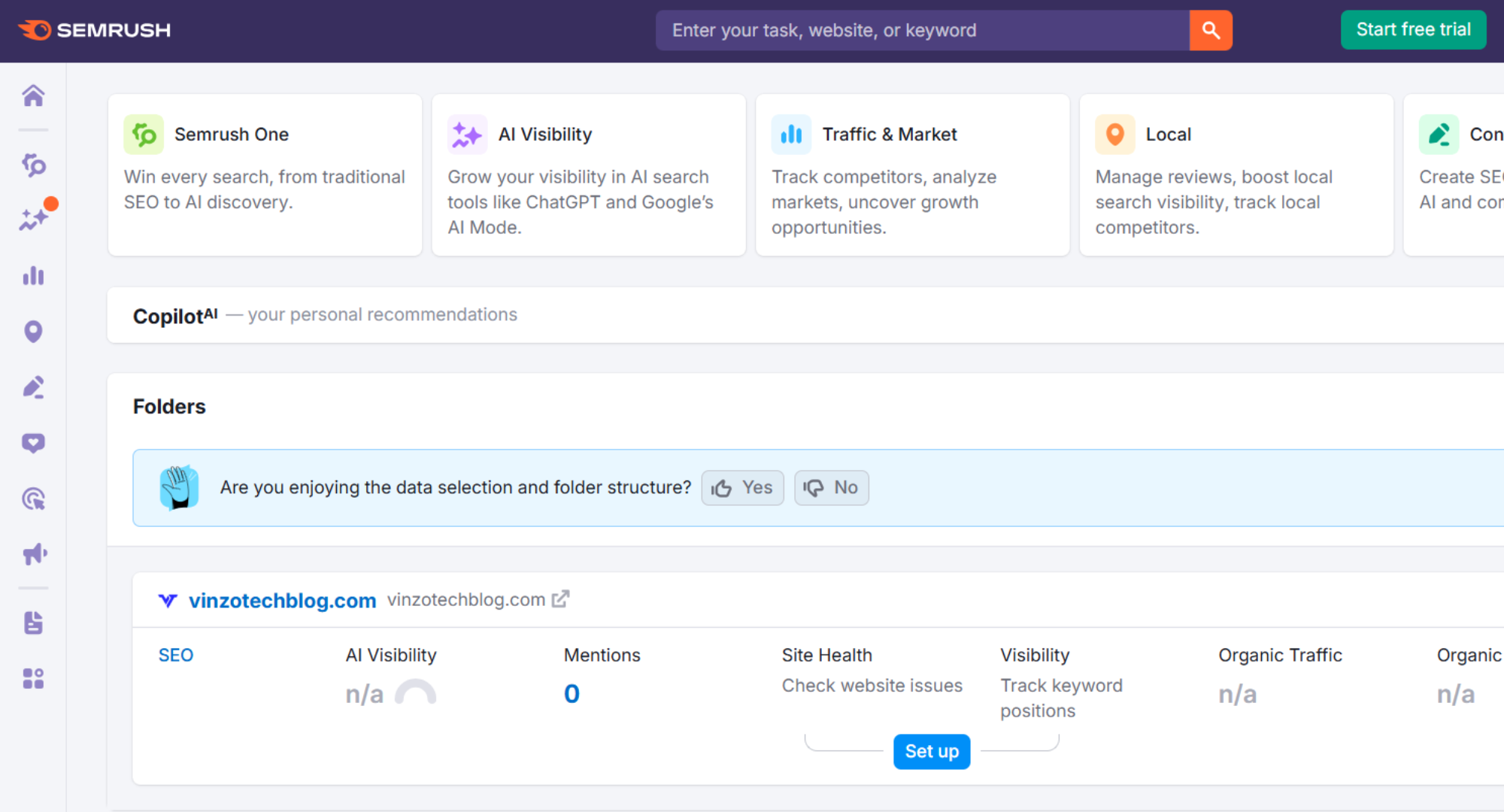
SEMrush offers insight into keyword performance, content positioning, and competitive visibility. It supports keyword intent analysis, SERP feature tracking, site audits, and topic research.
It is used to identify informational queries suited for AI Overviews, analyze intent mismatches, improve content structure based on SERP behavior, and track visibility across evolving layouts.
Understanding intent and SERP behavior helps create content that answers questions clearly and directly.
7.6 PageSpeed Insights
PageSpeed Insights evaluates performance using real-world and lab data. It measures Core Web Vitals, load times, interaction metrics, and provides performance recommendations.
In audits, it identifies slow pages, improves mobile experience, reduces layout shifts, and strengthens reliability signals.
Pages with poor performance metrics are less dependable and less likely to be referenced consistently by AI systems.
8. How These Tools Work Together in an AEO-Focused Audit
Each tool plays a specific role. Search Console reveals visibility and indexing health. Analytics shows user engagement. Screaming Frog exposes structural weaknesses. Ahrefs and SEMrush evaluate authority and relevance. PageSpeed Insights ensures performance reliability.
An effective SEO audit for Google AI Overviews integrates technical accuracy, content clarity, user behavior, and authority signals into one strategic assessment.
9. Conclusion
SEO audits have become strategic assets in the age of Google AI Overviews. They are no longer about chasing algorithms, but about ensuring clarity, trust, and usefulness at every level of a site.
By combining technical stability, structured content, and demonstrated expertise, an AEO-focused SEO audit helps your content remain visible, credible, and relevant, regardless of how search presentation continues to evolve.