
Content marketing continues to be one of the most reliable ways for brands to attract attention, build trust, and convert audiences into long-term customers. In 2026, the digital space is more competitive than ever, and users expect helpful, accurate, and relevant content at every stage of their journey.
Search engines prioritize experience, expertise, authority, and trust, while audiences reward brands that consistently deliver value. This is where content marketing tools play a crucial role. They help marketers research better topics, create higher-quality content, distribute it effectively, and measure real performance without relying on guesswork.
What Is Content Marketing in Today’s Digital Landscape
Content marketing is the practice of creating and sharing valuable, relevant, and consistent content to attract and retain a clearly defined audience. Unlike traditional advertising, it focuses on solving problems, answering questions, and educating readers rather than pushing direct sales messages.
In today’s environment, content marketing is closely tied to search behavior, data insights, and audience intent. Successful brands use content to guide users naturally from awareness to decision. while maintaining authenticity and credibility. Modern content marketing tools support this process by simplifying research, optimization, and analysis.
Content Marketing Strategies That Work in 2026
Audience-First Content Planning
Understanding user intent is the foundation of effective content marketing. Marketers now focus on what users want to learn, compare, or solve rather than targeting keywords alone.
Search-Driven Content Strategy
Search engines reward depth, clarity, and relevance. Content strategies in 2026 combine keyword research with topical authority and real-world expertise.
Multi-Format Content Creation
Blogs remain essential, but video, visual assets, short-form content, and email play equally important roles in reaching different audience segments.
Consistency and Quality
Publishing fewer, high-quality pieces often delivers better results than producing large volumes of shallow content. Content marketing tools help maintain consistency across teams and platforms.
How to Plan an Effective Content Marketing Strategy
Setting Clear Goals and KPIs
Every content strategy should start with defined goals: traffic growth, engagement, leads, or brand awareness. These goals guide topic selection and performance measurement.
Research and Topic Selection
Keyword research, audience questions, and competitor analysis help identify content gaps. The goal is to create content that answers real user needs, not just trending topics.
Content Creation and Publishing Workflow
An editorial calendar ensures consistency and alignment. Planning topics in advance helps maintain quality and reduces last-minute pressure.
Distribution and Promotion
Even great content needs visibility. Organic search, social media, and email marketing play a key role in distribution and reach.
Measuring and Optimizing Performance
Performance tracking allows marketers to refine content based on what actually works. Content marketing tools make this process data-driven and actionable.
Types of Content Marketing Used by Brands
- Blog articles and long-form guides
- Video content and visual storytelling
- Social media posts and community content
- Email newsletters and drip campaigns
- Case studies, whitepapers, and evergreen resources
Each format serves a specific purpose within the broader content marketing strategy.
Real-World Example: How Zapier Benefits from Content Marketing Tools
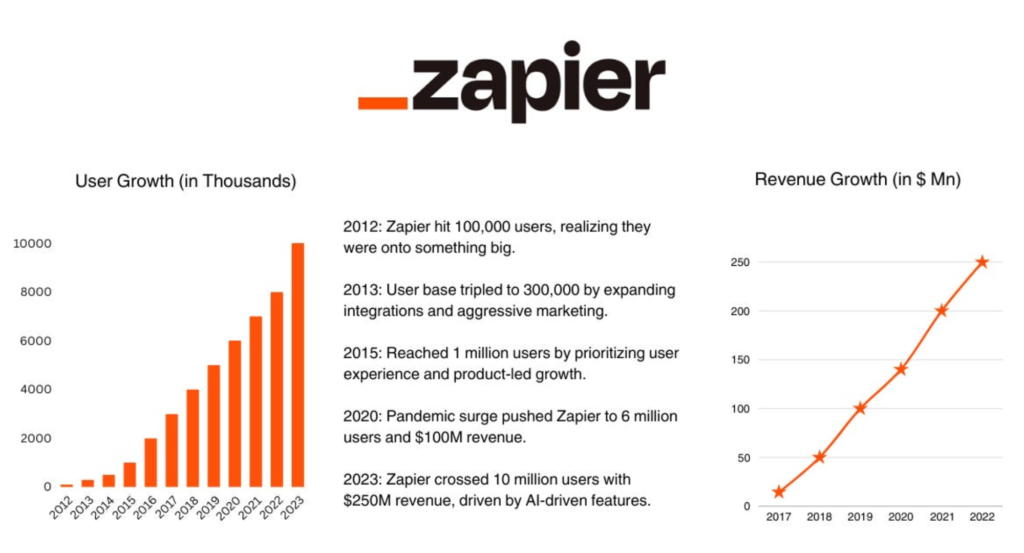
Zapier is a SaaS company known for its automation platform, but one of its biggest growth drivers is its content-focused website. Zapier attracts millions of visitors every month through educational blog content rather than relying heavily on paid advertising.
Why This Example Matters
Zapier proves that content marketing tools, when used correctly, help transform a blog into a scalable acquisition channel. The tools support research, optimization, and measurement but the real success comes from creating genuinely useful content for the audience.
Read This:- AI-Powered Productivity Tools for Smarter Workflows
Top 10 Marketing Tools for 2026
Content marketing has grown more structured and data-driven over the years. While creativity and expertise remain at the core, tools now play a supporting role by helping marketers research better topics, create clearer content, track performance, and collaborate efficiently. Below are the most essential content marketing tools every marketer should understand and use in 2026.
Content Research and Ideation Tools
1) Ahrefs
Definition:
Ahrefs is a comprehensive SEO and content research platform designed to analyze search demand, backlinks, and competitor performance.
Examples of Use:
- Identifying high-intent keywords people are actively searching for
- Finding content gaps where competitors rank but your site does not
- Analyzing top-performing articles in your niche
Why It Matters in Content Marketing:
Ahrefs helps marketers create content based on real search behavior rather than assumptions. By understanding what already performs well, content can be planned with clarity and purpose, making it one of the most valuable content marketing tools for long-term organic growth.
2) SEMrush
Definition:
SEMrush is a digital marketing toolkit that supports keyword research, topic discovery, competitive analysis, and content planning.
Examples of Use:
- Discovering trending topics within a specific industry
- Building keyword clusters for pillar pages and supporting articles
- Analyzing competitor content strategies
Why It Matters in Content Marketing:
SEMrush helps transform raw keyword data into structured content plans. Marketers use it to align blog topics with audience intent, making content more discoverable and relevant.
Content Creation and Optimization Tools
3) Grammarly

Definition:
Grammarly is a writing assistant that checks grammar, tone, clarity, and sentence structure in real time.
Examples of Use:
- Editing blog posts before publishing
- Improving clarity in email campaigns and landing pages
- Maintaining consistent tone across multiple writers
Why It Matters in Content Marketing:
Clear communication builds trust. Grammarly ensures content sounds professional and easy to read, which improves user experience and credibility two essential elements of effective content marketing.
4) Hemingway Editor
Definition:
Hemingway Editor is a readability tool that highlights complex sentences, passive voice, and unnecessary words.
Examples of Use:
- Simplifying long or technical blog posts
- Improving content readability for broader audiences
- Refining content for mobile readers
Why It Matters in Content Marketing:
Search engines and readers prefer content that is easy to understand. Hemingway helps marketers produce content that is direct, concise, and engaging—qualities that improve time on page and overall performance.
SEO and Performance Tracking Tools
5) Google Search Console
Definition:
Google Search Console is a free tool that shows how a website appears in Google search results.
Examples of Use:
- Monitoring keyword rankings and impressions
- Identifying pages with declining performance
- Fixing indexing and technical SEO issues
Why It Matters in Content Marketing:
This tool provides direct insights from Google itself. It helps marketers understand how content performs in search and where improvements are needed, making it essential among modern content marketing tools.
6) Google Analytics
Definition:
Google Analytics tracks website traffic, user behavior, and engagement metrics.
Examples of Use:
- Measuring blog traffic and bounce rates
- Understanding how users move through content
- Identifying high-performing content formats
Why It Matters in Content Marketing:
Data-driven decisions lead to better results. Google Analytics helps marketers refine content strategies based on actual user behavior rather than assumptions.
Content Management and Collaboration Tools
7) WordPress
Definition:
WordPress is a content management system that allows users to create, publish, and manage digital content.
Examples of Use:
- Publishing blog articles and landing pages
- Organizing content with categories and tags
- Managing SEO plugins and editorial workflows
Why It Matters in Content Marketing:
WordPress offers flexibility, scalability, and control. It allows marketers to manage content efficiently while supporting SEO best practices, making it a foundation tool for many content strategies.
8) Trello

Definition:
Trello is a visual project management tool that helps teams organize tasks and workflows.
Examples of Use:
- Planning editorial calendars
- Tracking content from idea to publication
- Collaborating with writers, editors, and designers
Why It Matters in Content Marketing:
Consistency is key in content marketing. Trello helps teams stay organized and meet deadlines, ensuring a steady flow of high-quality content.
Analytics and Reporting Tools
9) HubSpot
Definition:
HubSpot is a CRM and marketing automation platform that connects content performance with lead and customer data.
Examples of Use:
- Tracking which blog posts generate leads
- Measuring content impact on conversions
- Aligning content marketing with sales goals
Why It Matters in Content Marketing:
HubSpot helps marketers connect content efforts directly to business outcomes, making it easier to justify investment in content marketing tools.
10) Hotjar
Definition:
Hotjar is a behavior analytics tool that shows how users interact with web pages through heatmaps and session recordings.
Examples of Use:
- Understanding how users scroll and click on blog pages
- Identifying content sections that lose attention
- Improving layout and content placement
Why It Matters in Content Marketing:
Hotjar reveals how content is experienced, not just how it performs. These insights help marketers optimize content for real user behavior.
Why These Content Marketing Tools Matter in 2026
Each tool serves a specific purpose, but together they support the entire content lifecycle from research and creation to distribution and optimization. When used strategically, content marketing tools help marketers work smarter, maintain quality, and build trust with their audience.
Conclusion: Building Sustainable Growth with the Right Tools
Content marketing remains one of the most effective digital strategies when executed with purpose and consistency. While tools simplify processes and provide valuable insights, true success comes from understanding your audience and delivering content that genuinely helps them.
By combining strong strategy with the right content marketing tools, marketers can build authority, drive organic growth, and stay competitive well beyond 2026.