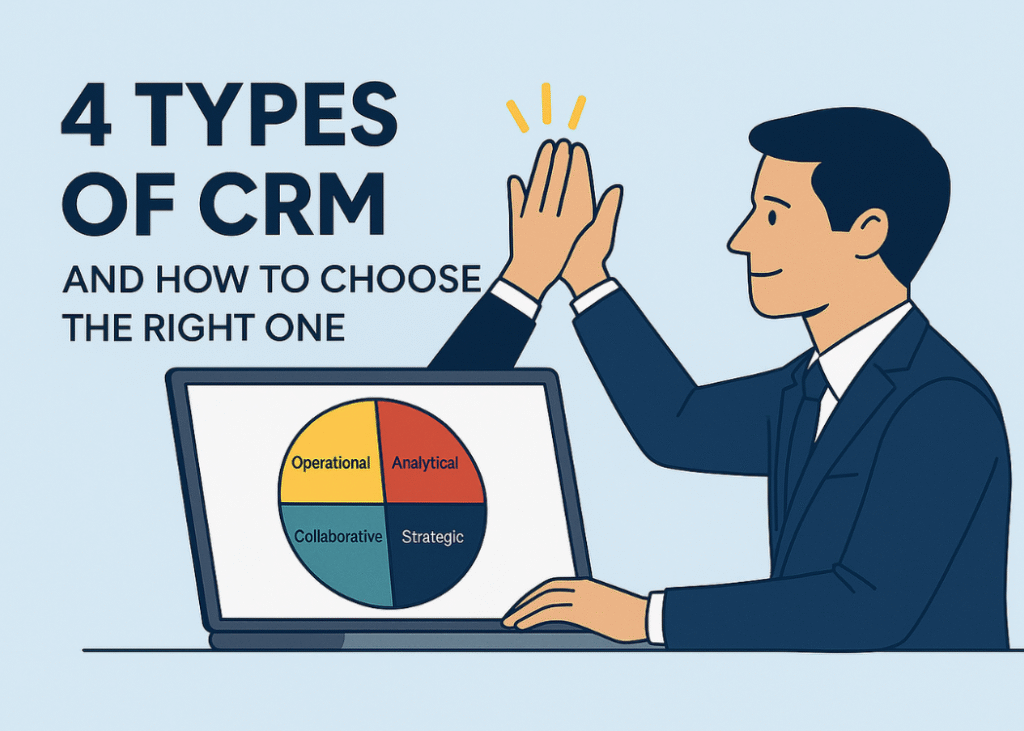
Four primary Types of CRM systems are operational, analytical, collaborative, and strategic. The objective of all these systems is to enhance sales, cultivate strong customer relationships, and give the business a competitive advantage in the market.
An effective customer relationship management strategy helps you manage the whole customer journey from start to finish. Types of CRM offer specific features that support communication, improve efficiency, and increase team productivity. Choosing the CRM system that aligns with your business objectives means you can leverage personalized customer engagement, insightful campaigns, and a strong customer base, ultimately leading to higher revenue generation.
This article explains the benefits of CRM, the four types of CRM, how to select the most suitable CRM system, and the must-have features of any CRM platform.
More in This Guide
- What is CRM
- CRM benefits
- The four types of CRM
- How to choose CRM software
- Key CRM components to look for
- Frequently asked questions
- Put customer connections first with any types of CRM
Read This :- Top CRM Trends to Watch in 2026.
What Is CRM
Customer relationship management is a strategic method of handling interactions with customers and trainees. In real-life business scenarios, CRM refers to a range of tools that help customer-facing businesses track interactions, manage customer data, automate procedures, and develop long-lasting relationships.
An excellent CRM provides detailed customer data, simplifies your execution process, and helps your company stand out in delivering exceptional service across all customer touchpoints.
CRM Benefits
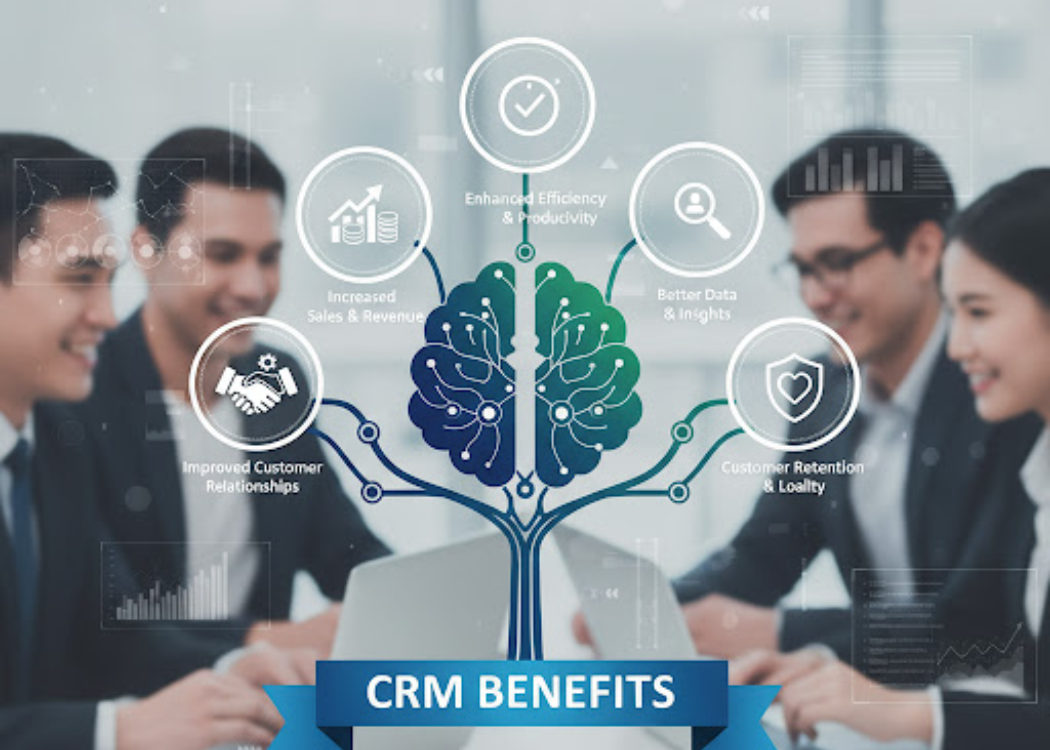
CRM software is essential for any company aiming to increase sales, build stronger relationships, and achieve stable revenue growth. The core benefits are detailed below.
1. Improve Team Productivity
A CRM system centralizes all the information your sales team requires. Tasks, contacts, communication history, pipeline updates, and customer insights are managed in one place. This removes confusion and prevents your team from wasting time using disconnected tools.
Key productivity features include:
Communication
A unified space where team members can access updates, monitor deals, and discuss customer interactions.
Automation
Modern CRMs automate repetitive tasks like data entry, scheduling, reminders, and follow ups. This allows sales teams to focus on planning and selling. Strong automation and collaboration tools make operations efficient, enabling staff to perform at the highest level.
2. Stronger Customer Relations and Higher Retention
Customer retention depends on consistently delivering personalized customer experiences. CRMs centralize customer records from multiple sources, allowing teams to create targeted messaging, personalized offers, and accurate communication that strengthens loyalty.
Each customer receives appropriate interaction at the right time because your team has complete visibility of their history.
3. Better Data Analytics and Fewer Data Silos
A CRM centralizes all data and removes silos. Customer insights become accessible to everyone across the organization, giving a complete view of interactions.
Advanced analytics help you identify:
- Customer trends
- Sales patterns
- Retention drivers
- Growth opportunities
- Upsell and cross sell potential
This ensures smarter, data-backed decisions instead of assumption-based strategies.
4. Organized Customer Profiles
CRMs consolidate scattered customer information into detailed profiles that include:
- Contact details
- Purchase history
- Preferences
- Interaction logs
- Communication touchpoints
These unified profiles strengthen segmentation, targeting, and prioritization, helping your team focus on the right opportunities.
5. Easier Collaboration
CRMs enable collaboration between sales, service, and marketing teams by offering a shared platform with real-time visibility. This accelerates deal cycles, improves service quality, and creates consistent outcomes.
The Four Types of CRM
Companies rely on four types of CRM systems: operational, analytical, collaborative, and strategic. Each type functions like a specialized tool that solves a specific business need.
1. Operational CRM
Operational CRMs automate and streamline customer-facing processes. They power sales, marketing, and service departments by bringing the entire buyer journey under a unified system.
Key features:
- Sales automation: Automates lead scoring, opportunity tracking, and quote processes
- Contact management: Makes customer information easily accessible
- Service management: Includes ticketing, live chat, and support tools for fast resolution
Operational CRMs help teams increase productivity and eliminate time-consuming manual tasks.
Best suited for:
- Small and medium-sized companies
- Departments seeking workflow automation
- Enterprises looking to refine customer lifecycle management
2. Analytical CRM
Analytical CRMs give businesses deep insight into customer data. They uncover purchasing patterns, forecast outcomes, and support data-driven strategic decisions.
Major strengths:
- Data mining: Predicts behavior and identifies growth opportunities
- Data warehousing: Handles large volumes of data for analysis
- Reporting: Generates KPI-focused dashboards that track customer churn, cycle length, and more
Analytical CRMs expose what drives sales, loyalty, and satisfaction.
Suitable for:
- Businesses managing large data volumes
- Enterprises focused on segmentation
- Organizations prioritizing data-based decision making
3. Collaborative CRM
Collaborative CRMs support teamwork by centralizing complete customer information and improving interdepartmental communication.
Key features:
- Interaction management: Tracks customer activities across phone, email, social media, and chat
- Channel management: Maintains consistency across communication channels
- Document management: Stores important customer files centrally
- Partner Relationship Management (PRM): Manages external partner interactions and resources
Collaborative CRMs eliminate miscommunication and guarantee smooth customer experiences.
Suitable for:
- Multi-department companies
- Organizations with hybrid or remote teams
- Businesses where customer success depends on teamwork
4. Strategic CRM
Strategic CRMs identify high-value customers and focus on long-term engagement strategies that maximize lifetime value.
Core features:
- Customer segmentation
- Customer engagement planning
- Customer data management
- Lifetime Value (LTV) tracking
Strategic CRMs shift the business from transactional thinking to relationship-driven growth.
Useful for:
- Enterprise-level organizations
- Companies committed to long-term customer relationships
- Businesses seeking automation, insights, and scalability
How to Choose CRM Software
Selecting the right CRM requires thoughtful planning, strategic analysis, and clarity on business goals.
1. Identify Goals and Objectives
Determine what your CRM should achieve:
- Higher sales
- Improved productivity
- Stronger customer loyalty
- Workflow automation
- Better customer insights
Without clear objectives, a CRM cannot deliver maximum value.
2. Pick a Budget
Consider all cost factors:
- Licensing
- Implementation
- Training
- Add-ons
- Support
- Integrations
Even free CRMs may carry hidden expenses, so budget planning is essential.
3. Understand Feature, Functionality, and Integration Requirements
Your CRM should support:
- Workflow automation
- Reporting and analytics
- Lead and deal management
- Sales forecasting
- Customization
- Integrations with existing tools
If a CRM cannot integrate with your workflow, it will disrupt it.
4. Check Scalability and Growth Potential
Your CRM should handle:
- More users
- Larger datasets
- New branches or regional offices
A scalable CRM protects your long-term investment.
5. Compare CRM Software
To make an informed decision:
- Schedule demos
- Test free trials
- Read customer reviews
- Compare pricing
- Evaluate features
This ensures you select the right CRM for your business needs.
Key CRM Components to Look For
When choosing a CRM, prioritize:
- Easy setup
- Integration support
- Collaboration features
- Flexible pricing
- Advanced analytics
- Secure data handling
- Mobile access
Your choices should align with your business goals and company size.
Frequently Asked Questions
What is CRM used for?
CRM helps companies communicate with customers, manage sales activities, and strengthen customer relationships.
Why is CRM software important?
It increases productivity, improves decision making, and enhances business performance.
Can you use different types of CRM at the same time?
Yes. Modern CRMs often combine operational, analytical, collaborative, and strategic features.
How do the CRM types compare in cost?
Operational CRMs are generally the least expensive. Analytical and strategic CRMs cost more due to advanced data processing capabilities.
What is the difference between B2B and B2C CRM?
B2B CRMs manage long sales cycles and account-based relationships.
B2C CRMs handle high customer volume and faster transactions.
What types of data are in CRM?
Behavioral data, demographic data, interaction history, sales activity, and support records.
Final Thoughts: Strengthen Your Growth With the Right CRM Choice
Selecting the right types of CRM is more than a software decision. It is a long-term investment in customer relationships, team performance, and business scalability. Operational CRMs keep your daily workflow running smoothly, while analytical, collaborative, and strategic CRMs unlock deeper insights, align teams, and build long-lasting customer loyalty. When you choose a CRM that truly fits your goals, you empower your business with improved customer experiences, higher productivity, and consistent revenue growth.