Let me be real with you. I spent years checking my keyword rankings manually. Every morning, I’d open Google in incognito mode, type in my target keywords, and scroll through pages just to see where my site sat. It was exhausting, slow, and honestly not even that accurate.
Then I started using the best rank tracking tools, and everything changed.
When you know exactly where your pages rank, and more importantly why they’re moving up or down, you stop guessing and start making smart SEO decisions. Over the past five years, I’ve tested dozens of rank trackers. Some are overpriced and barely worth it. Others are free and genuinely powerful.
In this article, I’ll walk you through the top 10 free best rank tracker tools I actually use and recommend. No fluff, no random tool stuffed in to hit a number. Just honest takes from real experience.
What Are Rank Tracker Tools, and Why Do You Need One?
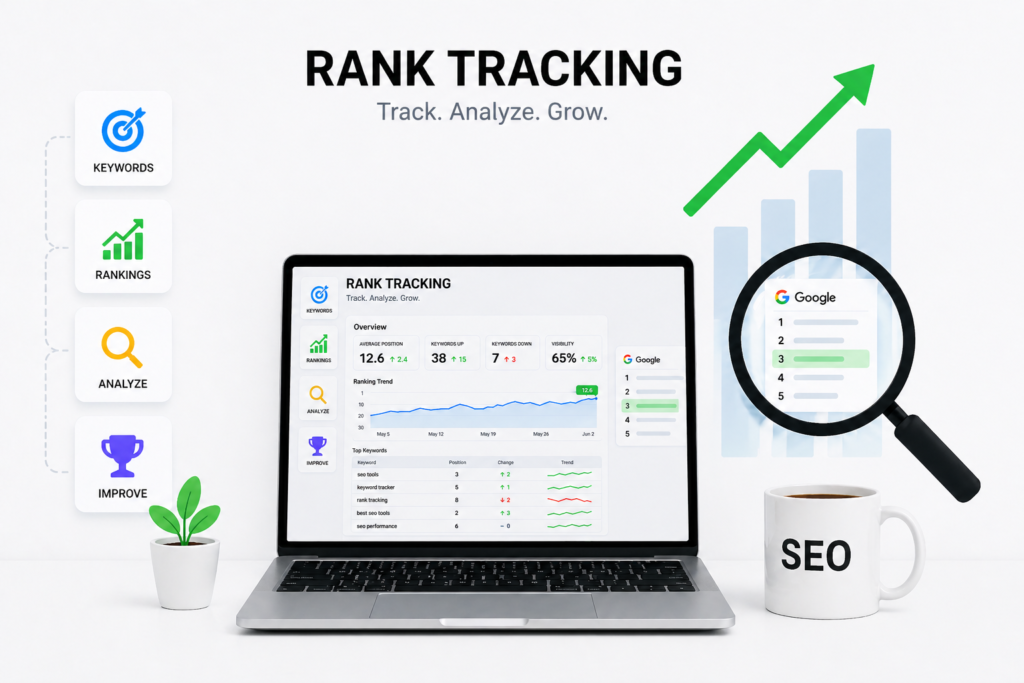
A rank tracking tool monitors where your website appears in Google (and other search engines) for specific keywords. Instead of checking manually every day, the tool does it automatically and shows you your ranking history, traffic trends, and competitor positions in one clean dashboard.
Here’s why this matters: SEO without rank tracking is like driving with your eyes closed. You might be publishing content regularly, building backlinks, fixing technical SEO issues, but without keyword position data, you have no idea if any of it is working.
Good rank tracking tools help you:
- See which keywords are climbing or dropping
- Spot Google algorithm update impacts fast
- Understand what your competitors are doing better
- Measure the ROI of your SEO efforts over time
Not all rank trackers work the same way. Before we get to the list, let me explain the different types of rank tracker tools, because this will help you pick the right one for your needs.
Types of Rank Tracker Tools (What Each One Actually Does)
Most people think all rank trackers do the same thing. They don’t. Here’s a breakdown of the main categories:
Keyword Position Trackers: These tools track exactly where your website ranks on Google for specific keywords. You enter a keyword, and the tool checks your keyword position daily or weekly. Tools like Google Search Console and SERPWatcher fall into this category. They’re the most common type and a great starting point for any SEO.
Organic Traffic Trackers: These go beyond rankings and show you how much organic traffic each keyword or page actually brings to your site. Google Analytics combined with Google Search Console is the best example. Knowing your ranking is #5 is useful, but knowing that position #5 brings you 300 clicks a month is even better.
Competitor Rank Trackers: These tools let you spy on your competitors’ keyword positions so you can find gaps and opportunities. Ubersuggest and SE Ranking both offer this in their free or trial tiers. If you see a competitor ranking for 50 keywords you’re not targeting, that’s your next content plan right there.
Local SEO Rank Trackers: These track your rankings in specific cities, ZIP codes, or regions rather than a country-wide average. If you run a local business, your national ranking is almost meaningless. What matters is whether you appear when someone in your city searches for your service. This is called local SEO tracking.
Backlink-Based Rank Trackers: Tools like Ahrefs Webmaster Tools track your keyword rankings alongside your backlink profile. Since backlinks directly impact rankings, seeing both pieces of data in one place helps you connect the dots faster.
SERP Feature Trackers: These track whether your page appears in featured snippets, People Also Ask boxes, or local packs, not just the standard blue links. SE Ranking and Semrush are strong here. As Google’s search results get more visual and varied, this type of tracking becomes more valuable.
Understanding these categories means you stop picking a tool at random and start picking one that actually solves your specific problem.
Read This : How AI Search Impacts SEO Strategies
Best Rank Tracker Tools Comparison for Better SEO Decisions
| Tool | Best For | Free Option | Main Strength | Limitation |
| Google Search Console | Every website owner | Completely free | Data comes directly from Google | Shows average position, not daily exact rank |
| Ahrefs Webmaster Tools | Backlink + rank tracking | Free for verified sites | Combines rankings with backlink data | Limited compared to paid Ahrefs |
| Ubersuggest | Beginners | Free tier available | Simple keyword tracking and SEO ideas | Limited daily searches |
| SEO PowerSuite Rank Tracker | Advanced SEO users | Free desktop version | Unlimited keyword tracking | Desktop tool, not cloud-based |
| SERPWatcher | Visual rank tracking | Free trial | Clean dashboard and performance index | Not forever free |
| SE Ranking | Agencies and marketers | Free trial | Tracks many search engines and keyword groups | Paid after trial |
| Semrush | Competitor research | Free tier available | Strong competitor keyword data | Very limited free usage |
| Moz Free Account | Authority + keyword checks | Free community account | Shows authority metrics with rankings | Manual checks only |
| Seobility Ranking Checker | Quick rank checks | Free checker | No-login keyword position checks | Not full daily tracking |
| Google Analytics + GSC | Traffic-focused SEO | Completely free | Connects rankings with user behavior | Needs GSC integration |
Top 10 Free Best Rank Tracker Tools
1. Google Search Console: Best Free Tool, Period
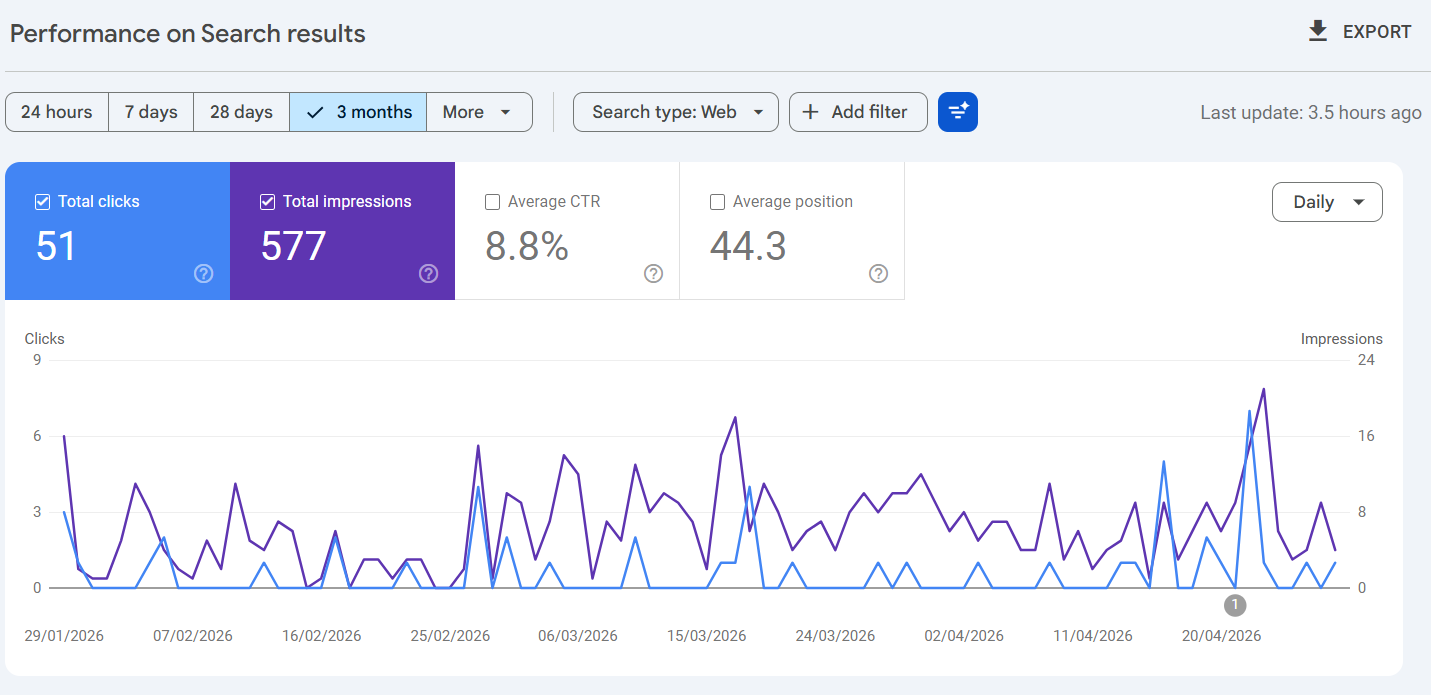
If you use only one rank tracking tool, make it Google Search Console. It’s completely free, it connects directly to Google’s index, and it gives you ranking data straight from the source with no estimation and no guessing.
You can see your average position for any query your site appears in, along with impressions, clicks, and click-through rate. The 16-month historical data window is genuinely useful for spotting long-term trends or understanding how an algorithm update hit you.
The downside? It’s not a traditional rank tracker. It shows average positions over time rather than a daily snapshot for a specific keyword. But as a foundation, nothing beats it, and every site owner should connect it on day one.
Pricing: Completely Free
Best for: Every website owner. Use this as your baseline before adding anything else.
2. Ahrefs Webmaster Tools: Best Free Backlink and Rank Combo
What I love about AWT is that it ties your ranking data to your backlink profile in one view. When a page drops in rankings, you can immediately check if it lost backlinks, which usually explains the drop. That connection between links and rankings is something most free tools completely ignore.
Pricing: Free for verified site owners. Paid plans start at $129/month.
Best for: Site owners who want both keyword tracking and backlink analysis without paying.
3. Ubersuggest: Best Free Tool for Beginners
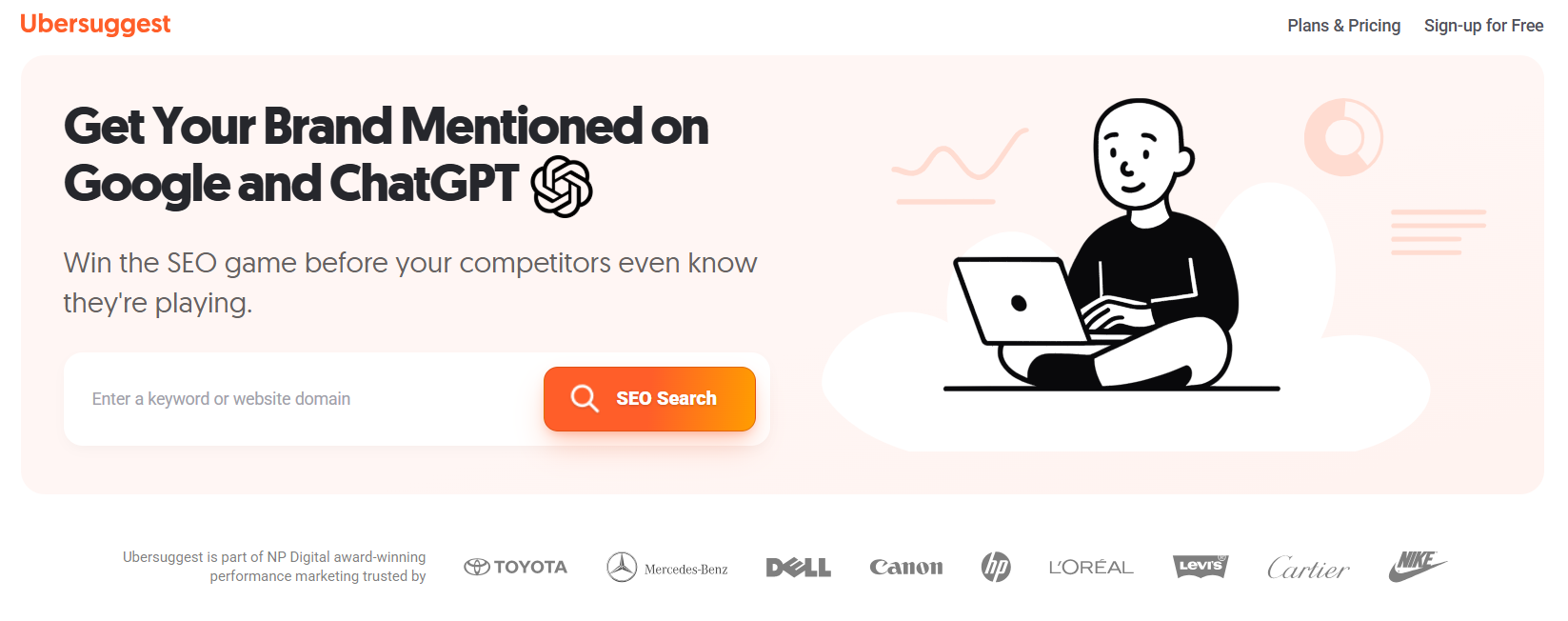
The interface is clean and beginner-friendly. You add your domain, plug in a few keywords to watch, and the tool keeps an eye on them for you. It’s not the most powerful option on this list, but for someone just starting out with SEO, Ubersuggest removes all the complexity and gets you tracking quickly.
One thing to note: Ubersuggest’s rank tracking only covers Google. If you care about Bing or other search engines, you’ll need a different tool for that.
Pricing: Free tier available (3 searches/day). Paid plans start at $29/month.
Best for: Beginners and solopreneurs who want an all-in-one free SEO tool that’s simple to understand.
4. SEO PowerSuite Rank Tracker: Best Unlimited Free Keyword Tracking
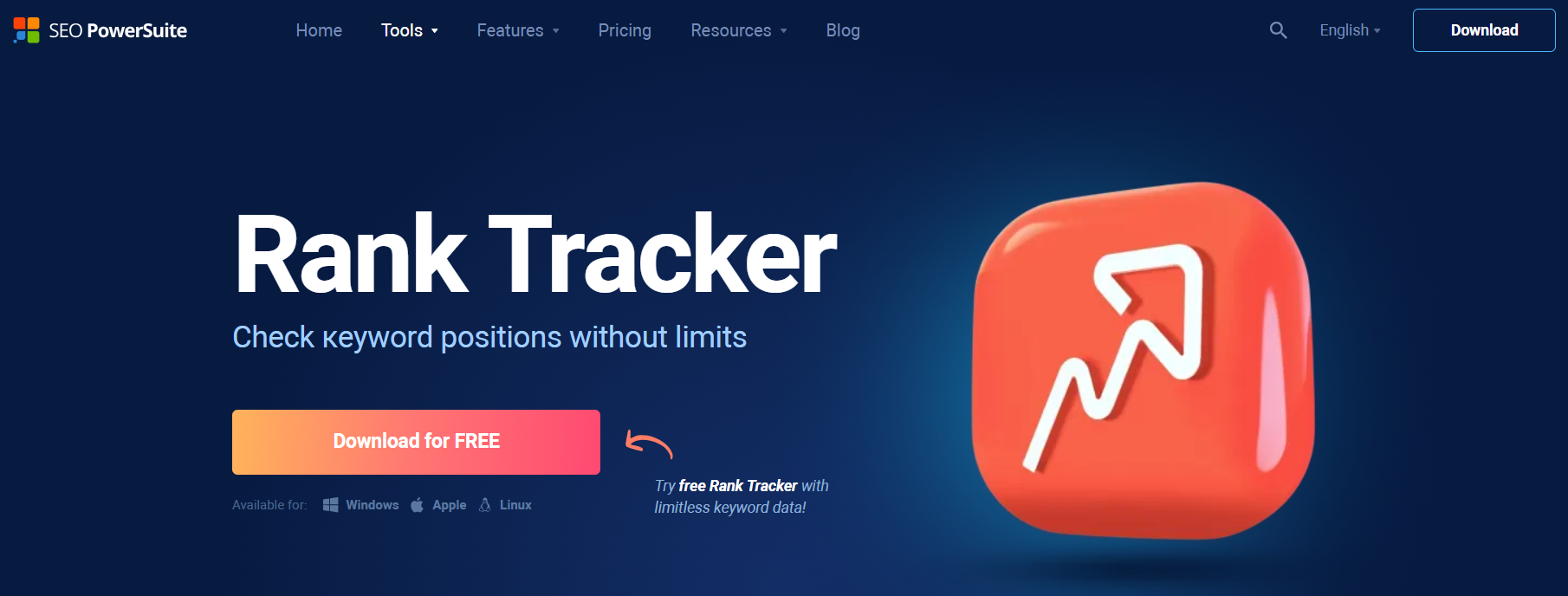
The tool supports local SEO tracking at country, city, or even zip code level, plus device-specific rankings for desktop vs. mobile, and historical data comparisons. It also integrates with Google Analytics and Google Search Console so you can see all your SEO data in one place.
The catch is that it’s desktop software, not a web app. You install it on your computer and run it from there, which makes it less convenient for teams. But for individual SEO pros, it’s one of the most generous free options available.
Pricing: Free version available. Paid plans start at $299/year.
Best for: Serious SEO practitioners who want deep tracking features and don’t mind using desktop software.
5. SERPWatcher by Mangools: Best for Beginners Who Want Visual Data
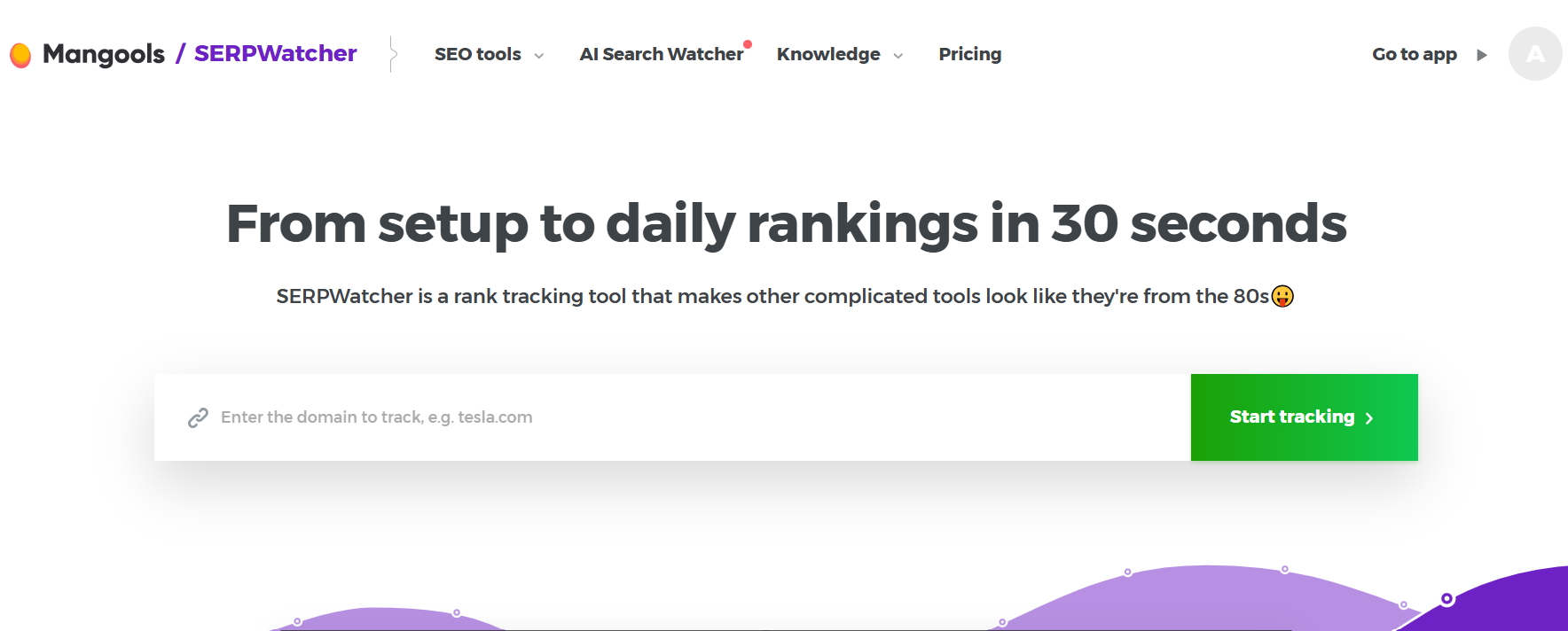
The free trial gives you enough time to feel out the interface and see if it works for your workflow. Automated ranking alerts and scheduled reports are built in, so you don’t have to check the tool manually every day.
Mangools positions SERPWatcher as a beginner-friendly tool, and that’s accurate. But it still keeps its depth and clarity. As your SEO knowledge grows, the tool grows with you.
Pricing: Free trial available. Paid plans start at $29.90/month (billed annually).
Best for: Beginners who want clean, visual ranking data without having to interpret raw numbers.
6. SE Ranking: Best Free Trial for All-in-One Tracking
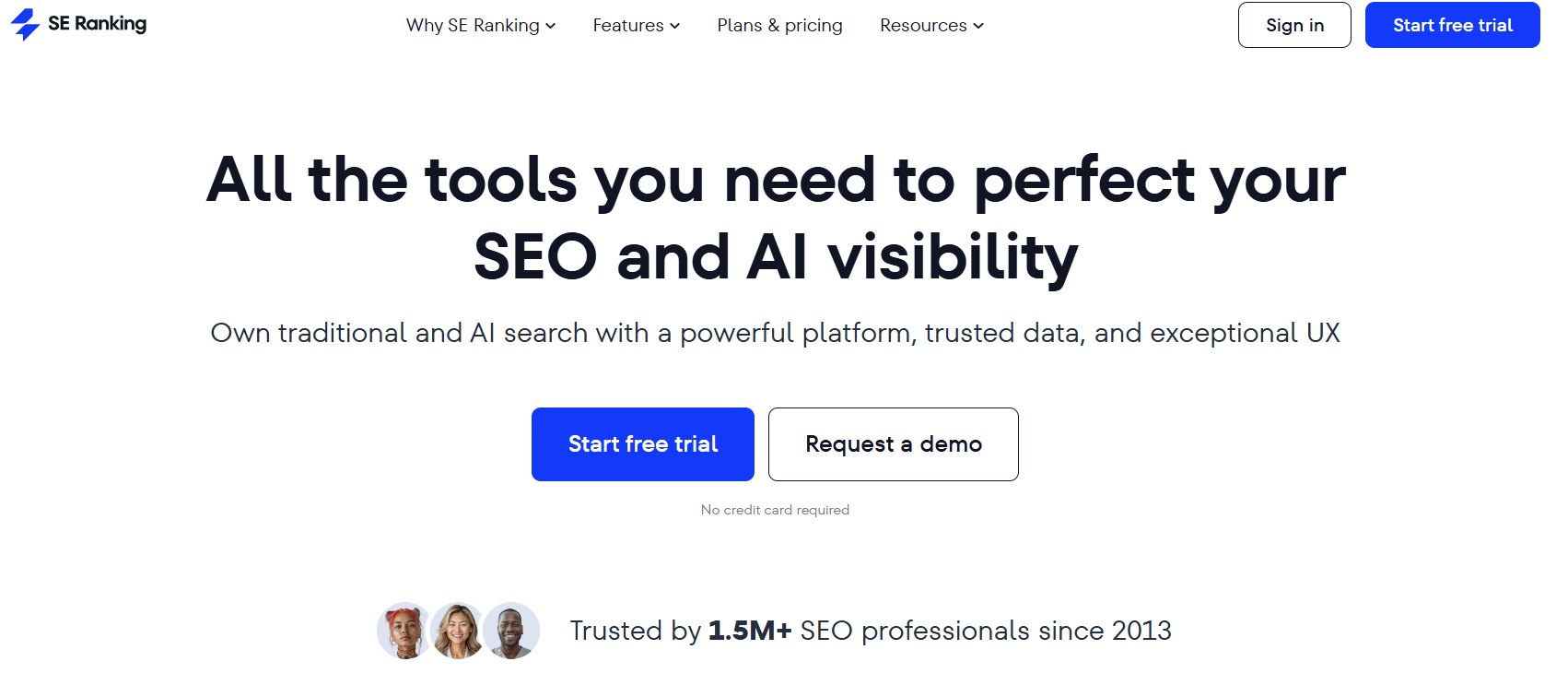
SE Ranking isn’t a forever-free tool, but its free trial is generous enough to earn a spot on this list. What makes SE Ranking stand out is the sheer range of what it tracks. You get daily keyword position updates across Google, Bing, Yahoo, YouTube, and even ChatGPT Search, which most rank tracking tools haven’t caught up to yet.
The “content score” feature aggregates your overall content performance and gives you specific recommendations for improvement. You can also group your keywords into clusters, which makes managing large keyword lists much easier when you’re working across multiple topics or client sites.
SE Ranking also connects with Google Analytics and Google Search Console, giving you a full picture of both ranking data and actual traffic behavior.
Pricing: Free trial available. Paid plans start at $69/month.
Best for: Marketers and small agencies who want to test a premium-quality all-in-one rank tracker before committing to a paid plan.
7. Semrush (Free Tier): Best for Competitor Keyword Research
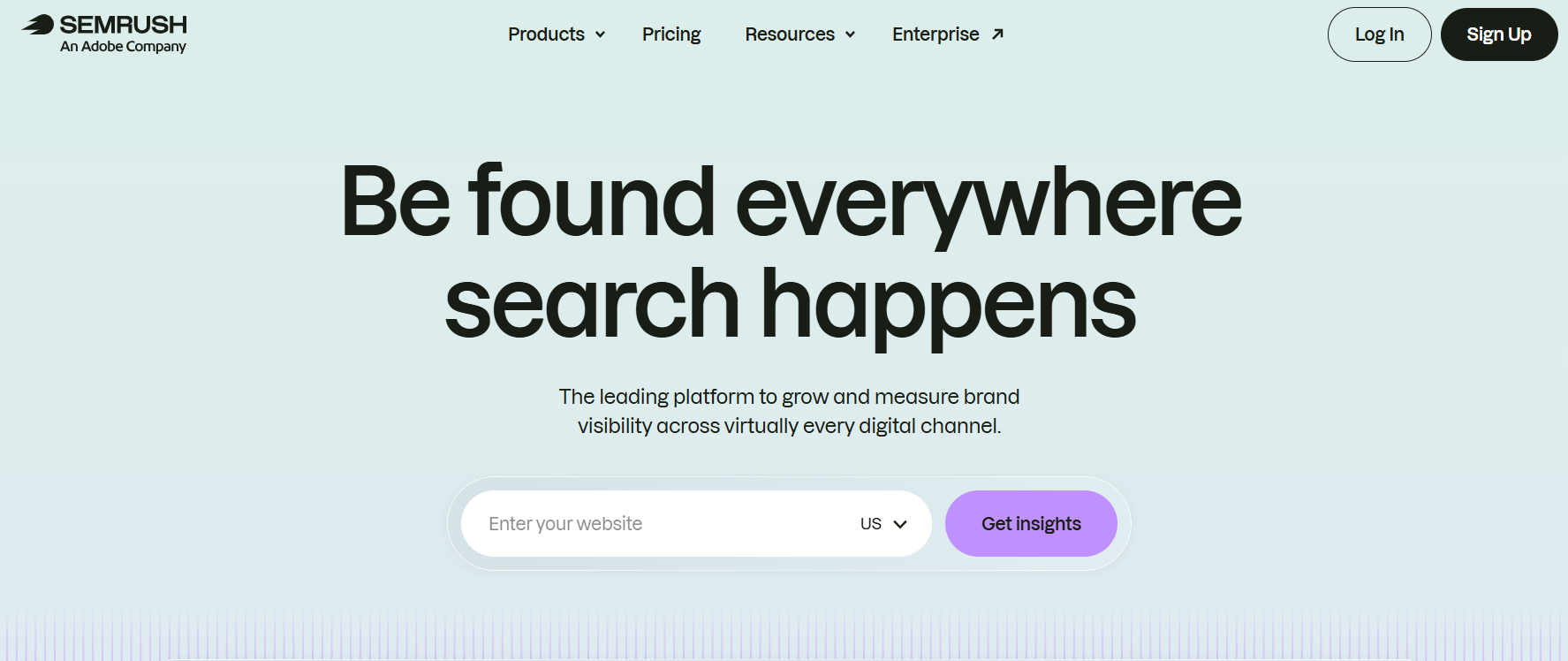
Semrush is one of the most well-known names in SEO, and their free tier gives you limited but valuable access to their rank tracking features. You can track a small set of keywords and view competitor ranking data, which is where the real value hides for free users.
The ability to plug in a competitor’s domain and see what keywords they rank for, along with estimated traffic, is genuinely powerful for building your content strategy. Where are they getting their organic traffic from? Which keywords are they ranking #1 for that you’re not targeting yet? That’s the kind of intelligence that shapes a 6-month content plan.
Semrush also integrates directly with Google tools, letting you dig into device-specific rankings, demographics, and keyword cannibalization issues if you upgrade to a paid plan later.
Pricing: Free tier available (10 searches/day). Paid plans start at $139.95/month.
Best for: Marketers and business owners focused on competitive analysis and finding keyword gaps.
Read This : AEO, GEO & SEO Explained: The New Era of Smart Search Begins
8. Moz Free Community Account: Best for Domain Authority Tracking Alongside Rankings
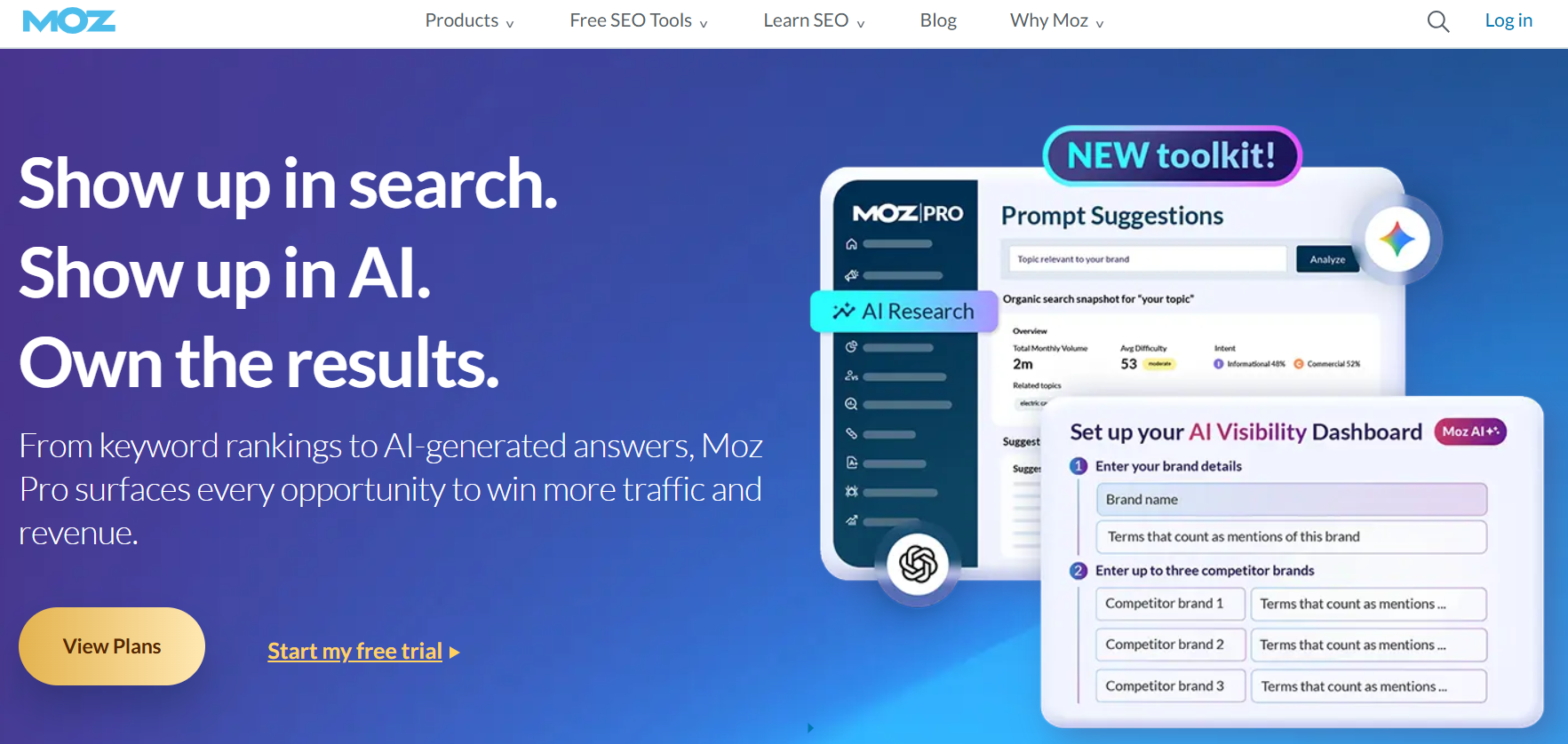
Moz built their reputation on metrics like Domain Authority and Page Authority, and their free community account gives you limited on-demand access to their keyword rank checker and explorer. It’s not an automatic daily tracker. You manually check keywords when you need to, but the data quality is solid.
Where Moz adds unique value is connecting your keyword rankings to authority metrics. If your page is ranking #8 but your Domain Authority is lower than every competitor above you, Moz makes that gap visible. That tells you what you need to fix, not just that you’re ranking lower, but why.
Pricing: Free community account available. Paid plans start at $99/month.
Best for: SEO professionals who want to combine ranking data with domain and page authority insights.
9. Seobility Ranking Checker: Best Free Tool for Quick Spot Checks
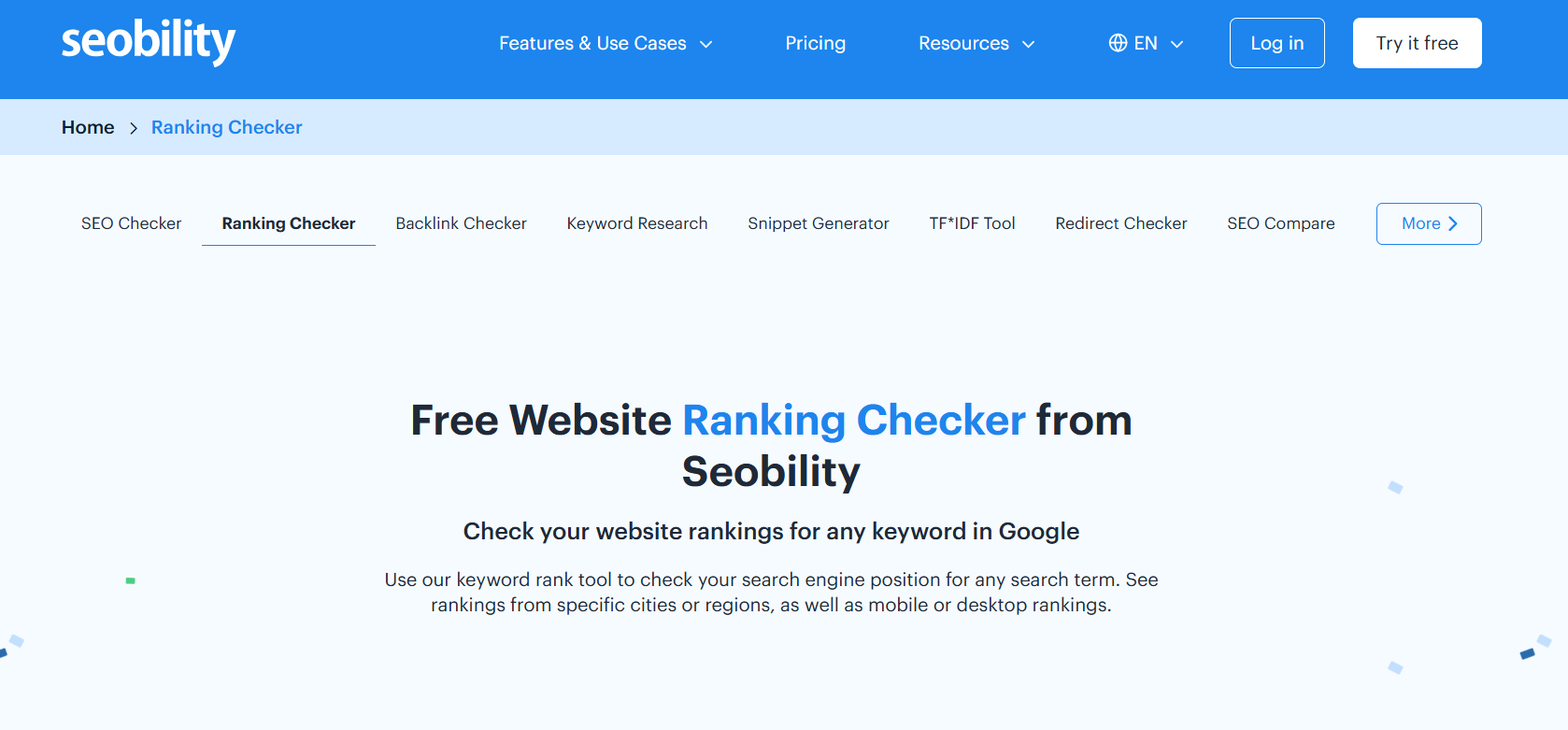
Seobility offers a free ranking checker that’s great for quick, on-demand keyword position checks without needing an account. You enter a keyword, your domain, and choose a country, and Seobility shows you your exact position plus the top 20 search results, complete with SERP snippet previews so you can analyze competitor titles and descriptions right there.
One thing that makes Seobility more reliable than just checking Google yourself: it removes personalization from results. When you search Google while logged in, it shows you results influenced by your location, search history, and browsing behavior. Seobility strips all of that out to show you neutral SERP data, which is what you actually want when doing rank research.
Their paid plan also offers daily continuous monitoring with PDF reports, but the free spot checker alone is worth bookmarking.
Pricing: Free ranking checker available. Paid plans start at $50/month.
Best for: Anyone who needs a fast, accurate, no-login keyword position check with competitor SERP previews.
10. Google Analytics (with GSC Integration): Best for Traffic-Focused Rank Analysis
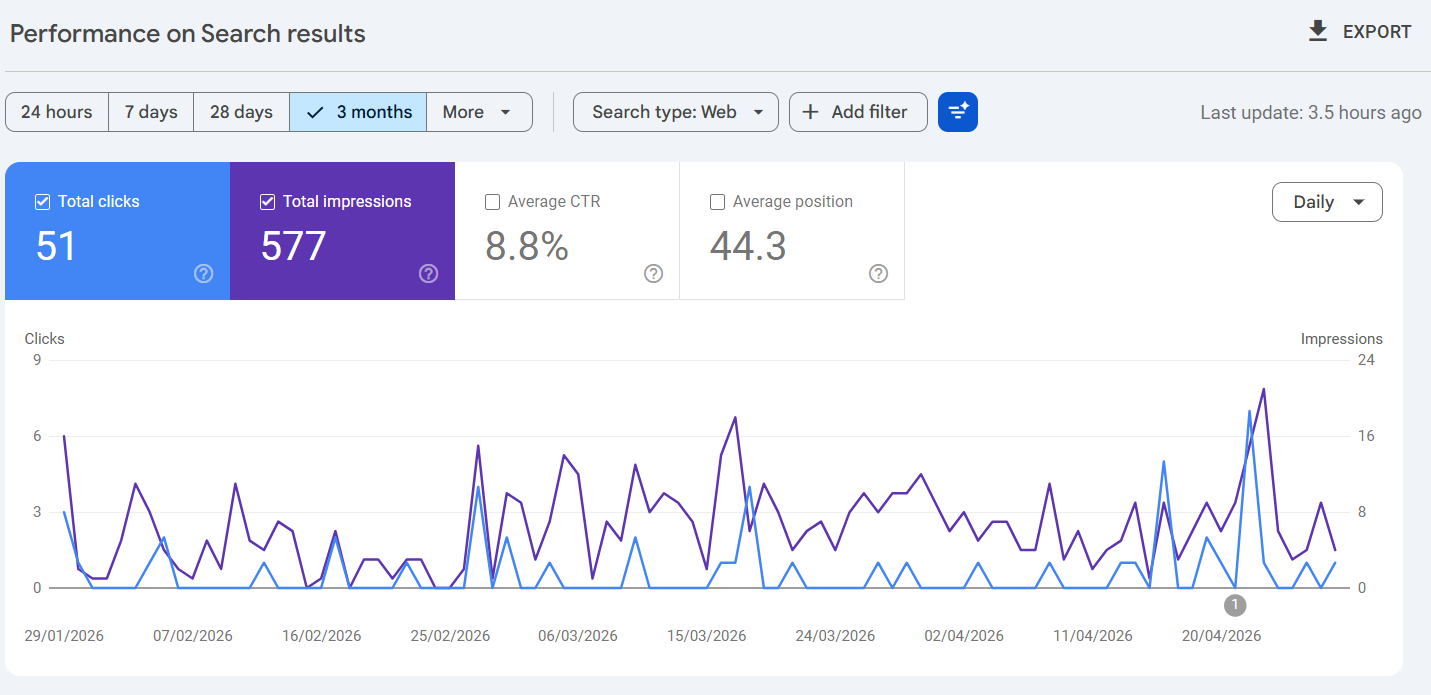
Google Analytics doesn’t provide keyword ranking data by itself since Google removed access to that information long ago. But when you connect Google Analytics with Google Search Console, you get a powerful combination. You can see which landing pages get the most organic traffic, and then cross-reference that with your Search Console data to understand which keywords are driving those visits.
This isn’t a traditional rank tracker, but it fills a gap the others miss. You might rank #3 for a keyword, but if that keyword drives zero clicks, it’s not worth chasing. Google Analytics combined with GSC shows you the whole picture, rankings and actual user behavior, in a way no third-party tool can perfectly replicate because the data comes directly from Google.
Pricing: Completely Free
Best for: Anyone serious about connecting SEO rankings to real business outcomes like traffic, engagement, and conversions.
How to Choose the Right Rank Tracking Tool for Your Needs
With 10 options on the table, the choice can still feel overwhelming. Here’s a simple way to think about it:
If you’re just starting out and have zero budget, start with Google Search Console and add Ubersuggest. These two together cover the basics. One gives you Google-direct ranking data, the other adds keyword research and a beginner-friendly interface.
If you’re a growing business with some SEO momentum, SE Ranking’s free trial or Ahrefs Webmaster Tools will give you the competitor analysis and deeper tracking you need to take the next step.
If you’re an SEO agency or power user, SEO PowerSuite Rank Tracker’s free desktop version is unmatched for sheer volume, tracking unlimited keywords across hundreds of search engines at no cost.
And regardless of which tool you pick, always keep Google Search Console running in the background. It’s the most accurate source of truth for your rankings because the data comes directly from the search engine you’re trying to rank in.
Final Thoughts
After five years of testing tools, the honest truth is this: the best rank tracking tools are the ones you actually check regularly. A free tool you review every week beats an expensive one you log into once a month.
Start with what’s free. Understand your data. Then scale to paid tools when the volume of keywords or the need for advanced competitor tracking justifies the cost. If you want to go beyond traditional rank tracking, explore how the ZipTie AI tool improves search analytics and performance. it tracks how your content appears across AI-powered search platforms, which standard rank trackers still miss.
The goal was never to collect tools. It was to grow organic traffic. These 10 free best rank tracking tools give you everything you need to do exactly that.