5 Best SaaS Inventory Management Software
IHL Group estimates that out-of-stocks and overstocks cost global retail about $1.73 trillion a year, roughly 6.5% of worldwide retail sales. Buyers, sales teams, and finance leads all need accurate stock data to avoid that loss, and spreadsheets struggle to supply it once orders arrive from several places.
This guide reviews five SaaS inventory management software options: Cin7, inFlow, Linnworks, Mandrel, and Invoryn. Each review draws on public vendor pages and third-party listings checked on October 22, 2026. The guide labels every claim that comes from a vendor’s own marketing.
What Is SaaS Inventory Management Software?
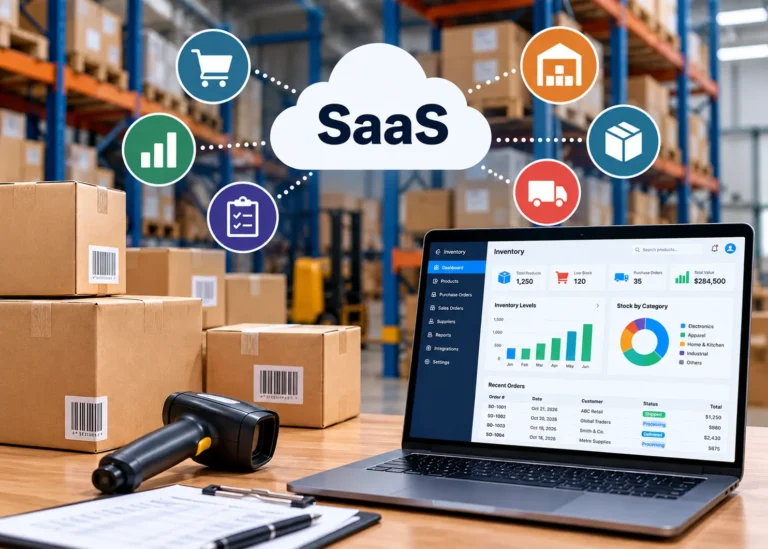
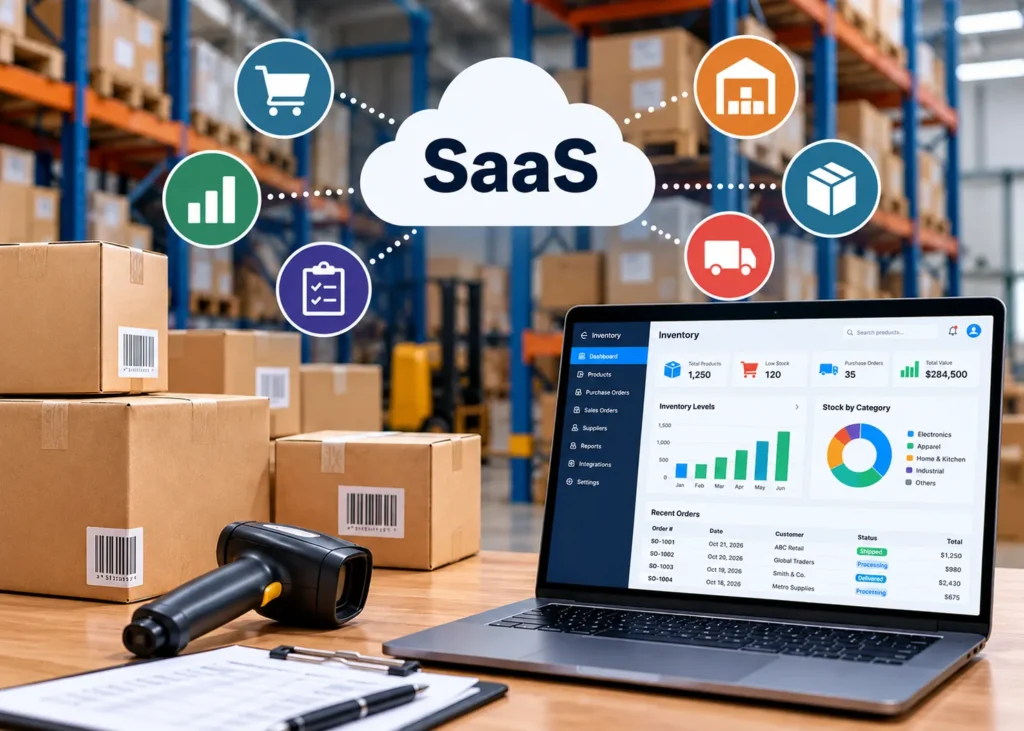
SaaS inventory management software is cloud-hosted software that tracks stock, purchase orders, sales orders, and suppliers through a browser or mobile app. The vendor runs the servers, ships updates, and charges a recurring subscription, which is how SaaS products work in general. Your team logs in and works from the same live data.
This guide covers software for physical stock. If you want to track your company’s own software subscriptions, that is a different category called SaaS license management, and these tools do not cover it.
Why Businesses Move Off Spreadsheets
- Real-time inventory tracking replaces manual counts and copy-paste errors.
- Multichannel sync stops overselling when the same product sells on a store, a marketplace, and a wholesale portal.
- Automated reorder alerts flag low stock before a stockout.
- Purchase order management keeps suppliers, costs, and delivery dates in one record.
- Accounting integrations push sales and cost data into tools like QuickBooks Online or Xero.
Inventory Software, WMS, and ERP: Where They Differ
Inventory software handles stock, purchasing, and orders. A warehouse management system (WMS) adds pick, pack, and bin-level control. An ERP adds accounting and finance on top. The tools below sit at different points on that line, and the right pick depends on which gap hurts most.
Features That Matter Most
Start with the basics, then add depth as your catalog and channels grow.
Core Features
- Real-time stock levels across locations
- Barcode scanning for receiving, picking, and counts
- Purchase orders and supplier management
- Low-stock alerts and reorder points
- Reporting on stock value, sales, and turnover
Growth Features
- Multichannel inventory management for marketplaces and online stores
- 3PL and multi-warehouse support
- Demand forecasting for buying decisions
- Manufacturing tools such as bills of materials and assembly
- Landed cost tracking for freight, duties, and fees
- API and integration depth with accounting, shipping, and ecommerce platforms
The 5 Best SaaS Inventory Management Software
1. Cin7
Best for: multichannel sellers, wholesalers, and product businesses that also manufacture.
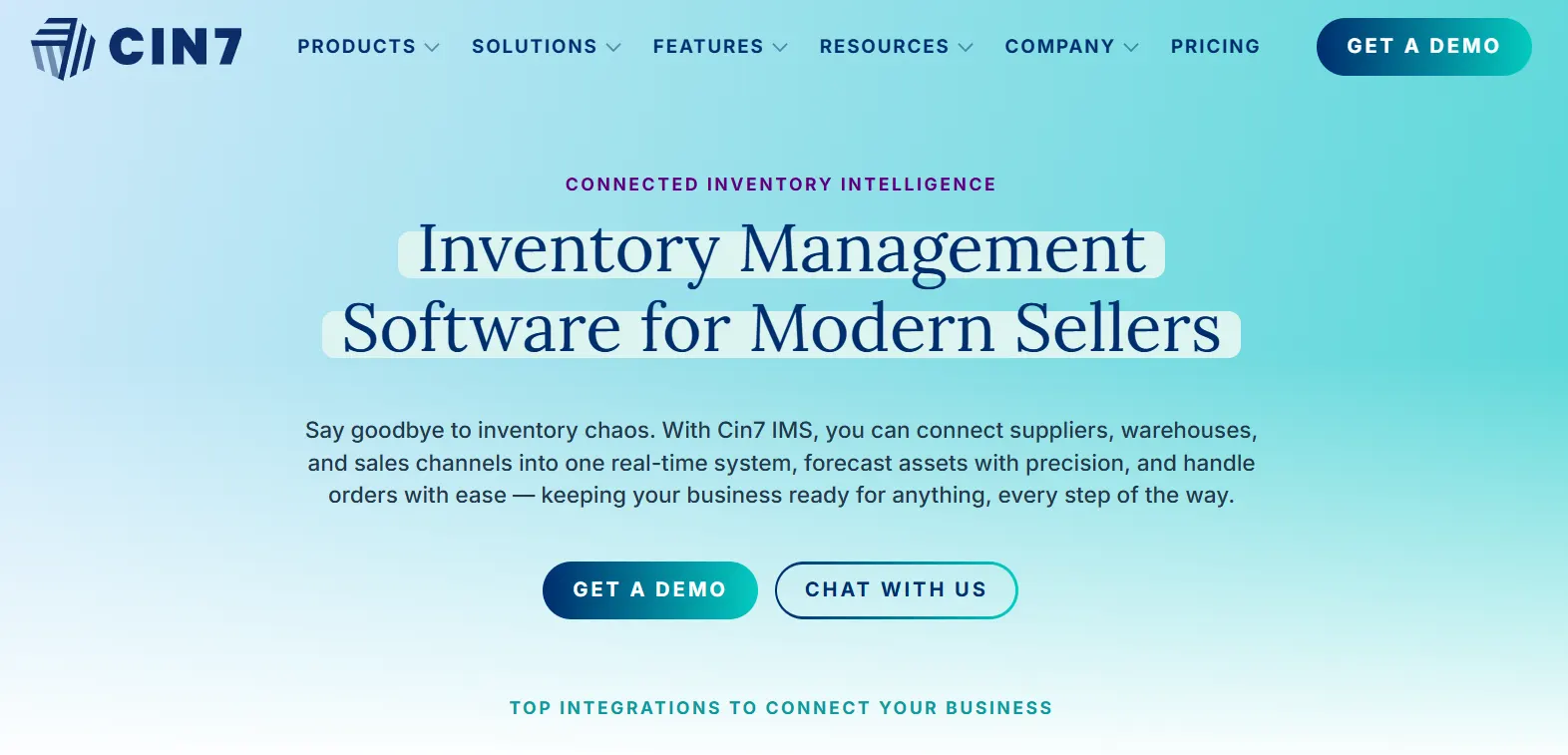
Cin7 sells two products, Cin7 Core and Cin7 Omni. The company says it connects suppliers, warehouses, and sales channels in one real-time system. Its site lists more than 700 integration partners and add-ons for AI forecasting (ForesightAI), payments, B2B ordering, and 3PL connections.
Cin7 reports 8,500+ customers and 125+ million orders processed per year. Those figures come from Cin7’s homepage. Capterra shows Cin7 Core at 4.3 out of 5 across 734 reviews.
Key features
- Inventory, purchasing, and warehouse management
- Assembly and advanced manufacturing with bills of materials
- POS, ecommerce, order management, and a B2B portal
- Accounting integrations with QuickBooks Online and Xero
- AI features including forecasting and document recognition
Pros
- Broad feature set covers stock, sales, manufacturing, and finance connections
- Industry pages for food and beverage, fashion, furniture, health and beauty, and wholesale
- Published starting price and a free trial option
Limitations
- Cin7 Core starts at $349 per month on the Standard plan. That price may feel steep for very small teams.
- Reviewer summaries on Software Advice describe reporting as rigid and slow.
- Higher-tier prices differ across sources, so confirm them with Cin7.
2. inFlow
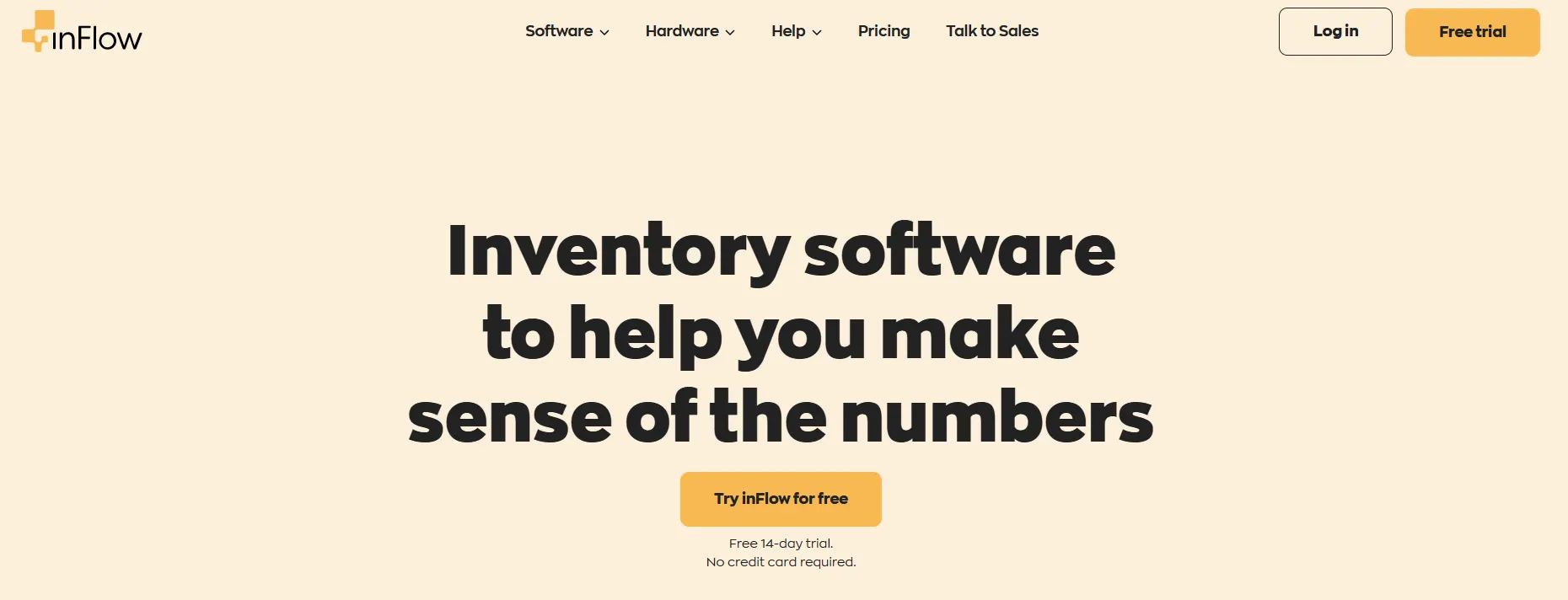
Best for: small and mid-size businesses that want a clear, easy system with barcoding.
inFlow comes from Archon Systems, a Canadian company with support teams in Toronto and Lisbon. It offers three products: inFlow Inventory, inFlow Manufacturing, and inFlow Stockroom for scan-in and scan-out control. It also sells a smartphone scanner and portable label printer.
inFlow says more than 50,000 businesses use it, and it claims GDPR and SOC 2 compliance. Both claims come from inFlow’s homepage. Capterra lists inFlow at 4.6 out of 5 across 504 reviews.
Key features
- Inventory control across locations
- Barcode generation and scanning
- Sales, invoicing, purchasing, and receiving
- B2B portal for sharing your catalog online
- AI Report Assistant, plus a connection that lets you manage orders through Claude
Pros
- Free 14-day trial with no credit card
- Guided onboarding with a named customer success manager
- Use cases for wholesale, asset tracking, HVAC, and field service
Limitations
- A third-party review lists plans from $129 per month on annual billing, with order caps on lower tiers, and advises against inFlow for businesses far above 10,000 sales orders per month. Verify current pricing, since vendors change it.
- Some reports sit behind higher-tier plans, according to the same review.
3. Linnworks
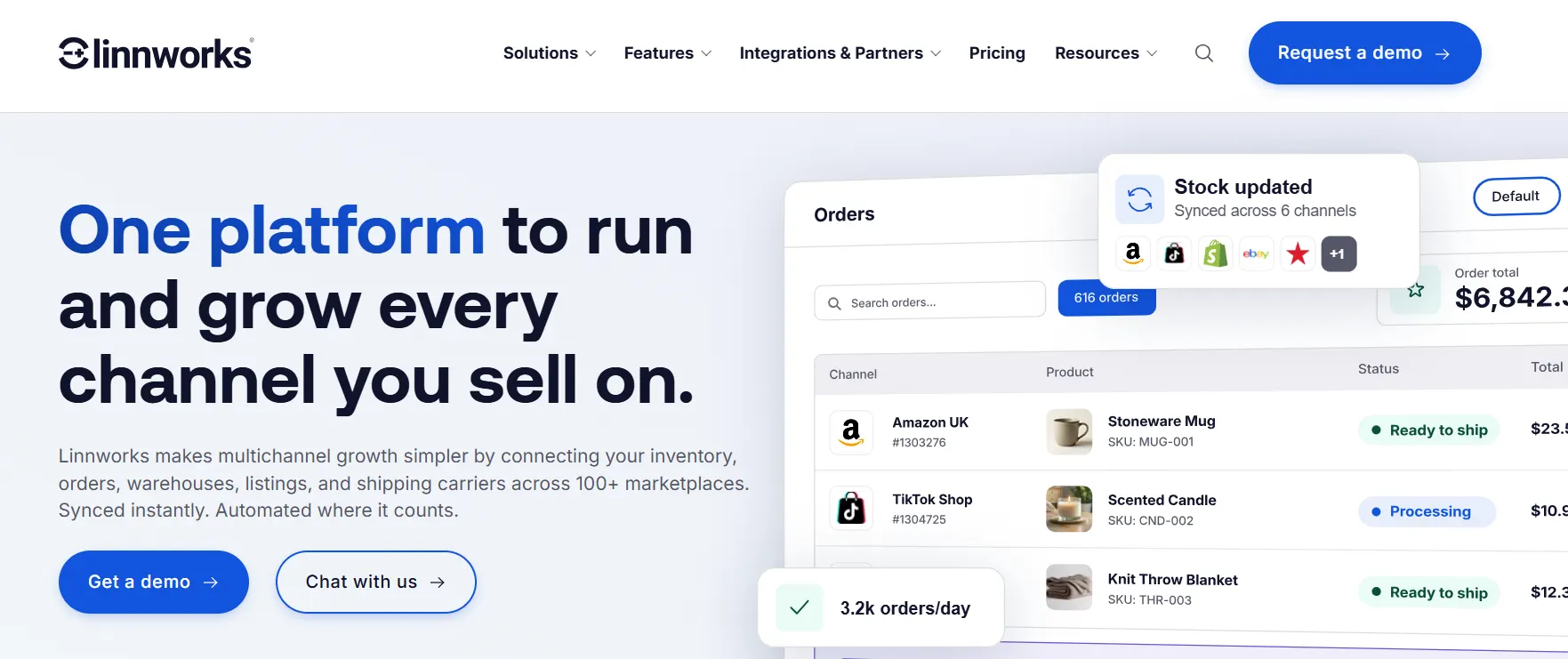
Best for: ecommerce sellers who run many marketplaces and need order automation.
Linnworks positions itself as a hub for inventory, orders, warehouses, listings, and shipping carriers across 100+ marketplaces and channels, including Amazon, eBay, Walmart, Shopify, and TikTok Shop. The company reports 4,000+ active customers and says automation saves 52+ hours per month on average. Treat both as vendor claims.
Key features
- Stock sync across channels to reduce oversells
- Rules-based order routing, carrier selection, and label printing
- Routing to your own warehouse, a 3PL, or dropship suppliers
- Stock forecasting and channel-level reporting
- Spotlight AI, which flags repetitive tasks to automate
Pros
- Strong fit for marketplace-heavy sellers
- Pricing follows order volume and features, not the number of channels
- Public case studies, including Spreetail’s European expansion (vendor-published)
Limitations
- Pricing is usage-based, and Capterra shows a 4.1 rating from only 47 reviews. That sample is small compared with Cin7 or inFlow.
- Linnworks quotes pricing, so you cannot compare costs before talking to sales.
- Vendor-stated go-live takes 30 to 40 days, which is longer than lighter tools.
4. Mandrel
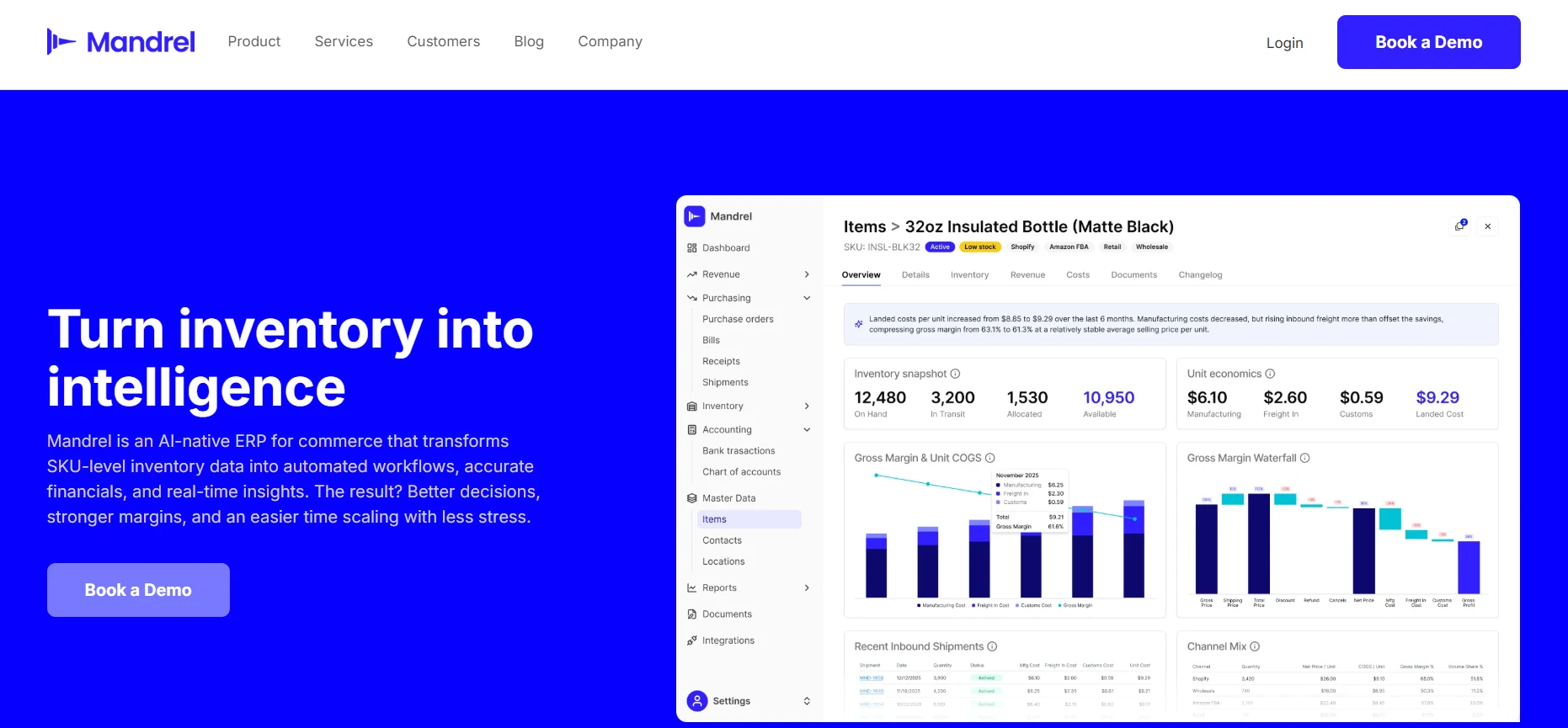
Best for: direct-to-consumer and ecommerce brands that care about landed cost and clean financials.
Mandrel calls itself an AI-native ERP for brands that sell physical goods. It organizes operations and finance around SKUs. Its site lists landed cost allocation across inbound shipments, AI document ingestion for purchase orders and invoices, automated revenue recognition, and GAAP-aligned accrual accounting.
Key features
- SKU-level view of revenue, costs, and inventory position
- Landed cost tracking for freight, tariffs, and fees
- Audit trail from journal entries back to source documents
- Master data for items, bills of materials, bundles, and vendors
Pros
- Ties stock movement directly to margin and accounting
- Useful for brands where tariffs and freight swing unit economics
- Its homepage shows customer logos from consumer brands
Limitations
- Mandrel was founded in 2023, sits in New York, and has raised $3.1 million from investors including Asymmetric Capital Partners, Construct Capital, and Lux Capital. That makes it a young vendor with limited track record.
- I found no public pricing and no independent review volume comparable to the tools above.
- Its ERP scope may exceed what a team needs if it only wants stock counts.
5. Invoryn
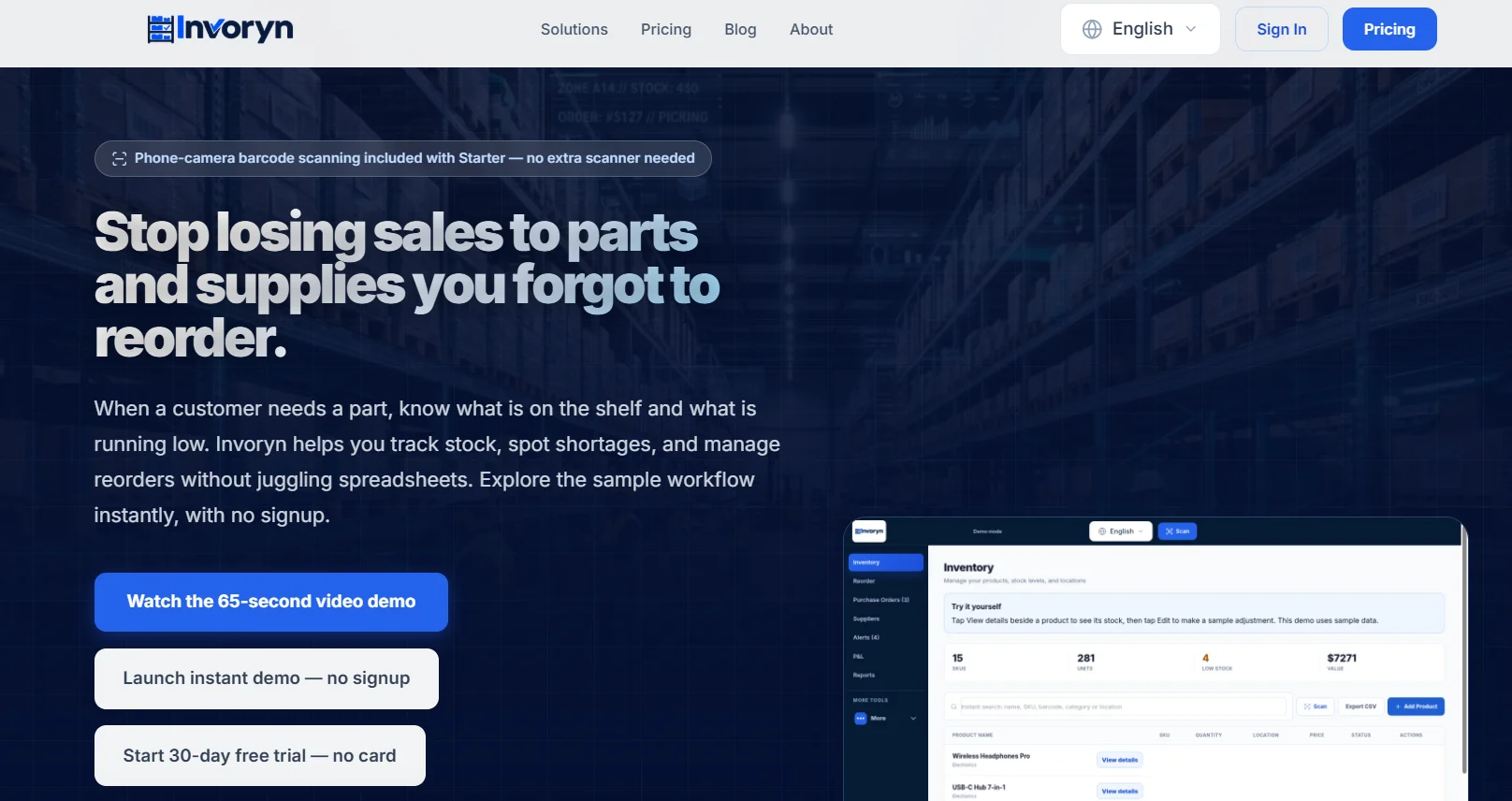
Best for: independent retailers, parts stores, and supply businesses that want a simple, low-cost start.
Invoryn comes from Fisher Software in Tampa, Florida, and targets independent businesses that want a step up from spreadsheets without enterprise software. Its site lists plan prices, a guided demo, and phone-camera barcode scanning with no extra hardware.
Key features
- Stock tracking, low-stock alerts, and supplier management
- Purchase orders, plus Autopilot recommendations and draft purchase orders on Pro
- Integrations with Square, Shopify, WooCommerce, Lightspeed Retail, QuickBooks Online, Clover, Slack, and Microsoft Teams
- Flat plan tiers instead of per-user fees
Pricing (from Invoryn’s site)
- Starter: $29 per month
- Pro: $79 per month
- Business: $149 per month, with multi-location support, team management, and API access
Pros
- Lowest published entry price in this list
- Plain pricing and a self-serve demo
- Published security and data handling page
Limitations
- Invoryn says Amazon Seller integration is not available yet.
- I found no independent reviews or public case studies, so every capability claim here comes from the vendor.
- It is a small, young vendor, so ask about data export, support response times, and roadmap before committing.
Comparison Table
| Tool | Best for | Starting price (as published) | Free trial | Standout strength | Watch out for |
| Cin7 | Multichannel, wholesale, manufacturing | $349/month (Core Standard) | Yes | Breadth across stock, sales, and manufacturing | Reporting reviews, higher entry cost |
| inFlow | Small and mid-size businesses | About $129/month on annual billing (third-party figure) | Yes, 14 days | Easy to use, barcoding hardware | Order caps on lower plans |
| Linnworks | Marketplace-heavy ecommerce | Quote, usage-based | Demo only found | 100+ channels, order automation | Small review base, quote-only pricing |
| Mandrel | DTC and ecommerce brands | Not published | Demo | Landed cost and GAAP accounting | Young vendor, ERP scope |
| Invoryn | Independent retailers and parts stores | $29/month | Advertised | Low price, phone scanning | No Amazon, little independent evidence |
Pricing reflects public sources checked October 22, 2026. Confirm every figure with the vendor.
How to Choose the Right Tool
Match Your Selling Model
- Many marketplaces: start with Linnworks or Cin7.
- Making or assembling products: compare Cin7 and inFlow Manufacturing.
- Single store or small catalog: try inFlow or Invoryn.
- Margin and tariff visibility: look at Mandrel.
Check Your Existing Stack
List your ecommerce platform, accounting system, shipping carriers, and POS. Then confirm each tool connects natively, not through a workaround.
Test With Your Own Data
Run a trial or demo with a real product sample. Load 50 SKUs, receive a purchase order, ship a sales order, and run a stock count. Check whether the reports answer the questions you actually ask.
Price the Whole Rollout
Subscription fees are one cost, and each vendor structures them differently, so it helps to know the common SaaS pricing models before you compare quotes.
Common Mistakes When Rolling Out Inventory Software
- Importing messy product data without cleaning SKUs first
- Skipping a physical count before go-live
- Ignoring how returns will flow back into stock
- Buying for the business you want in three years, not the one you run today
- Forgetting to train the warehouse team, not just the office
FAQ
What is SaaS inventory management software?
SaaS inventory management software is cloud-based software that tracks stock levels, purchase orders, sales orders, and suppliers through a web browser or mobile app. The vendor hosts the system and charges a recurring subscription, so businesses skip servers and manual installs. Updates arrive automatically, and teams in different locations see the same real-time stock data.
How much does SaaS inventory management software cost?
Prices range widely by order volume and features. Among the tools reviewed here, Invoryn lists plans from $29 per month, inFlow plans start around $129 per month on annual billing according to a third-party review, and Cin7 Core starts at $349 per month. Linnworks quotes by order volume, and Mandrel publishes no price. Confirm current pricing with each vendor before you budget.
What features should inventory management software have?
Look for real-time stock tracking across locations, barcode scanning, purchase order management, low-stock alerts, and reporting. Add multichannel sync if you sell on marketplaces, and accounting integrations such as QuickBooks Online or Xero if you keep your books there. Demand forecasting and landed cost tracking matter more as your product range and supplier base grow.
Which inventory software suits a small business?
Small teams can start with inFlow or Invoryn because both publish entry pricing and target small and mid-size operations. inFlow offers a 14-day free trial without a credit card. Invoryn starts at $29 per month and scans barcodes with a phone camera. Match the tool to your order volume, integrations, and growth plans, then test with a trial or demo before committing.
Which tool works best for multichannel sellers?
Linnworks and Cin7 both focus on multichannel selling. Linnworks connects inventory, orders, listings, and shipping across 100+ marketplaces and channels. Cin7 connects sales channels, suppliers, and warehouses and lists more than 700 app partners. Choose Linnworks if marketplace order volume drives your operation, and Cin7 if you also need manufacturing, wholesale, or B2B ordering.
Is inventory software different from an ERP?
Yes. Inventory software focuses on stock, purchasing, and order flow. An ERP also covers accounting, finance, and wider operations. Mandrel positions itself as an ERP for consumer brands that ties SKU-level inventory to GAAP accrual accounting. Cin7 integrates with accounting tools such as QuickBooks Online and Xero instead of replacing them. Pick an ERP-style tool when finance accuracy is the main pain.
How long does implementation take?
Timelines vary by complexity. Linnworks says customers can go live in as little as 30 to 40 days. inFlow offers guided onboarding with a customer success manager. Invoryn targets independent businesses that want a simpler step up from spreadsheets. Clean product data, accurate stock counts, and a clear integration list shorten any rollout.
Do SaaS inventory management tools offer free trials?
Several inventory tools offer free trials. inFlow offers a 14-day free trial with no credit card required. Cin7 lists a free trial option on its site, and Invoryn advertises a free trial and a guided demo. Linnworks and Mandrel point buyers to demos instead. Confirm trial length and limits with each vendor, then load real products to test reporting and integrations.
Does inventory software connect to accounting tools?
Several tools in this guide connect to accounting software, but depth varies. Cin7 integrates with QuickBooks Online and Xero to sync sales, purchases, and costs. Invoryn lists a QuickBooks Online integration. inFlow lists accounting among its integration categories. Mandrel takes a different route by building accounting into its ERP. Check that your exact accounting platform appears in the vendor’s integration list before you buy.
Which inventory software supports manufacturing?
Cin7 and inFlow both offer manufacturing features. Cin7 covers assembly and advanced manufacturing with bill of materials tracking. inFlow Manufacturing adds assembly and bills of materials to its core inventory tools. Mandrel also manages bills of materials and bundles inside its ERP. Pick based on production complexity, and ask each vendor how it handles multi-step builds and component costing.
Conclusion
Choosing the right SaaS inventory management software depends on your business needs, budget, and sales channels. Cin7 suits multichannel sellers and manufacturers, inFlow works well for small businesses, Linnworks supports marketplace-heavy ecommerce, Mandrel connects inventory with financial management, and Invoryn offers an affordable option for independent retailers.
Before making a decision, compare features, pricing, integrations, and scalability. Test your preferred tools through a trial or demo to find the best fit. The right software can reduce stock errors, improve efficiency, and support business growth.